Scotland 2026

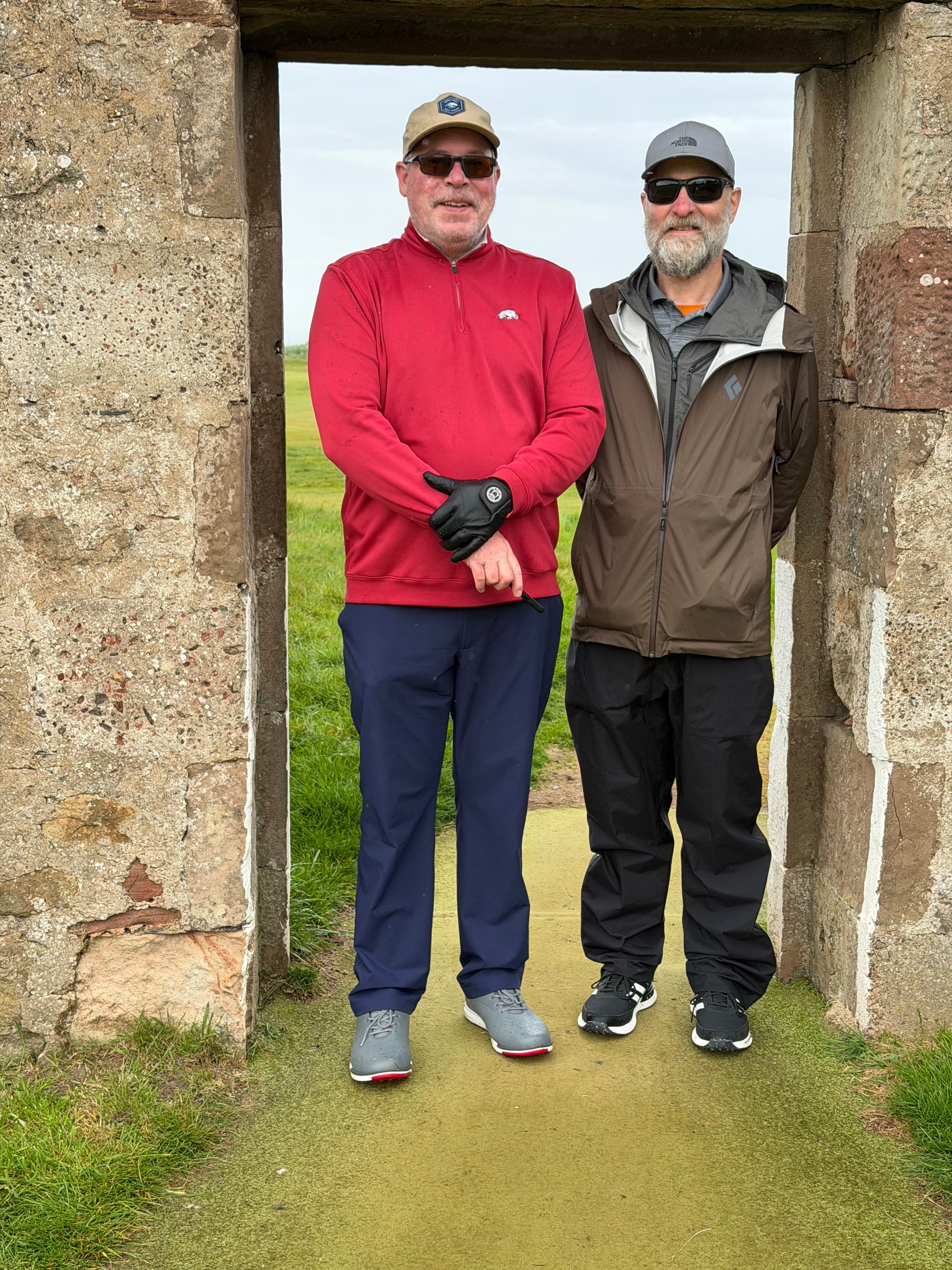
To celebrate my brother's 60th, the Holthoff boys jetted off to Scotland for a week of links golf. To say it was the trip of a lifetime would not be an overstatement.
We convened in Edinburgh, Scotland's ancient gray capital. It sits on the Firth of Forth, a deep bay of the North Sea that boasts dozens of world-class courses along its coastline.
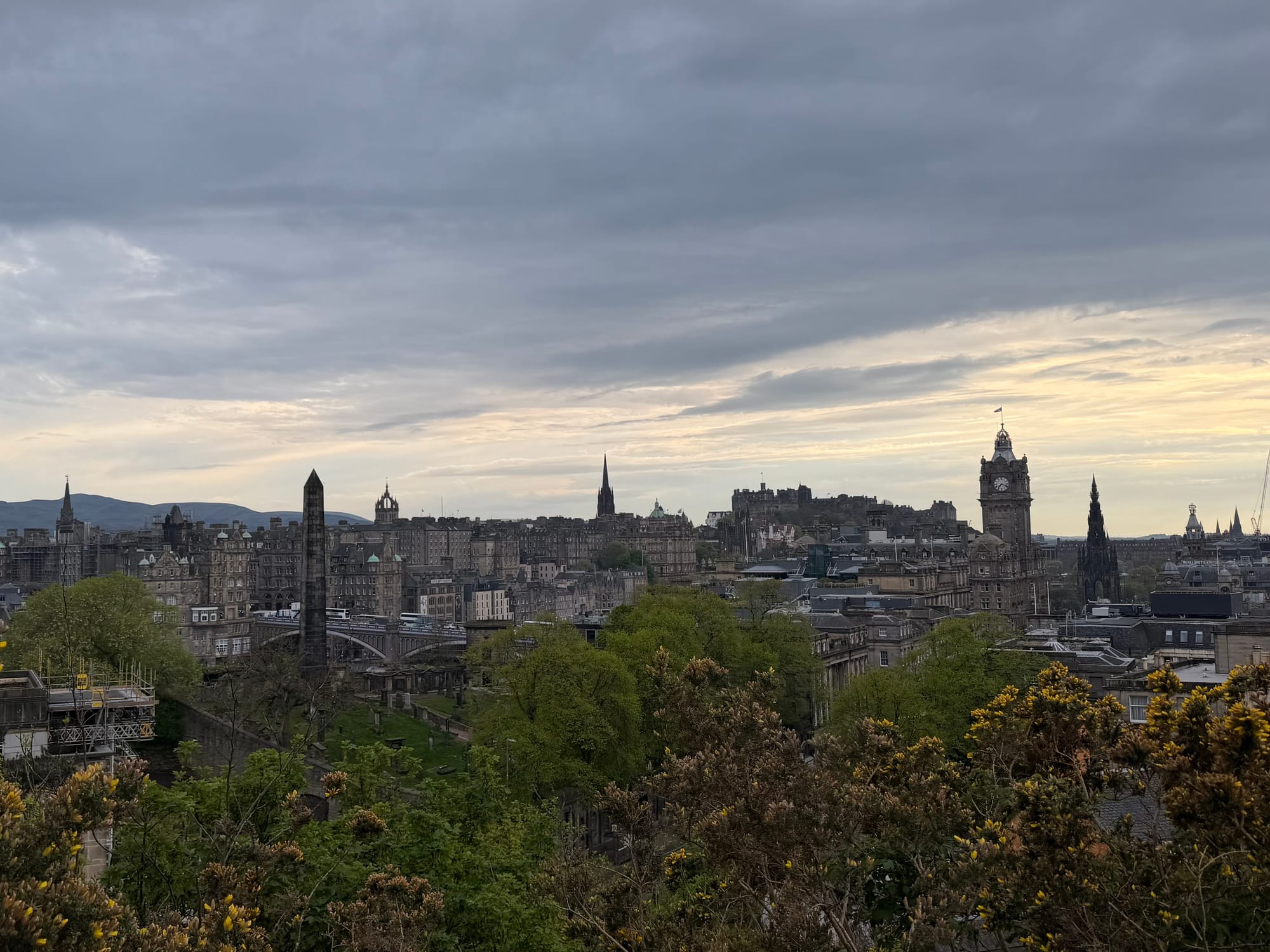
Early on a misty Sunday morning, we loaded our gear into a compact Mercedes SUV and embarked for our first destination: Crail.
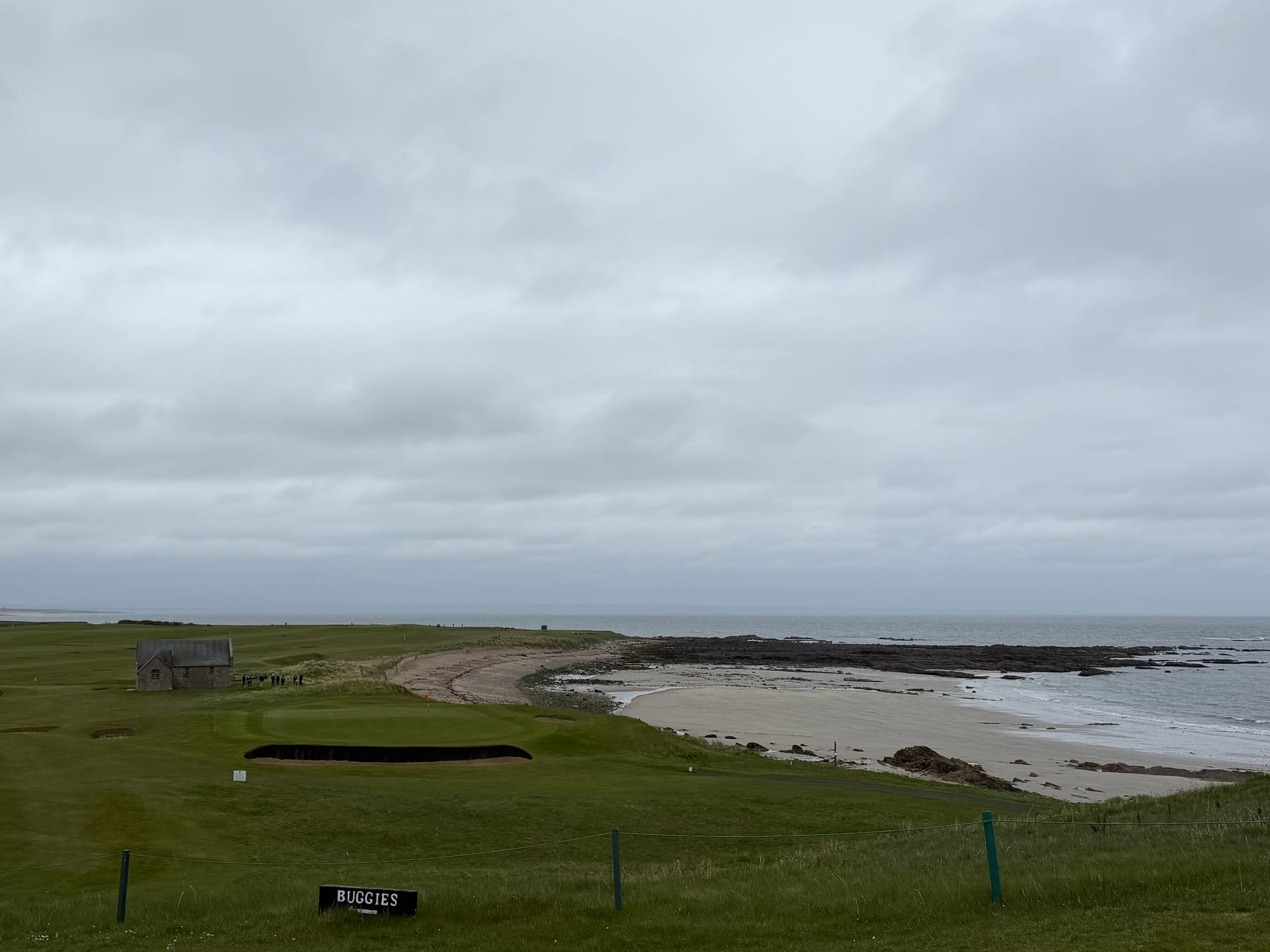
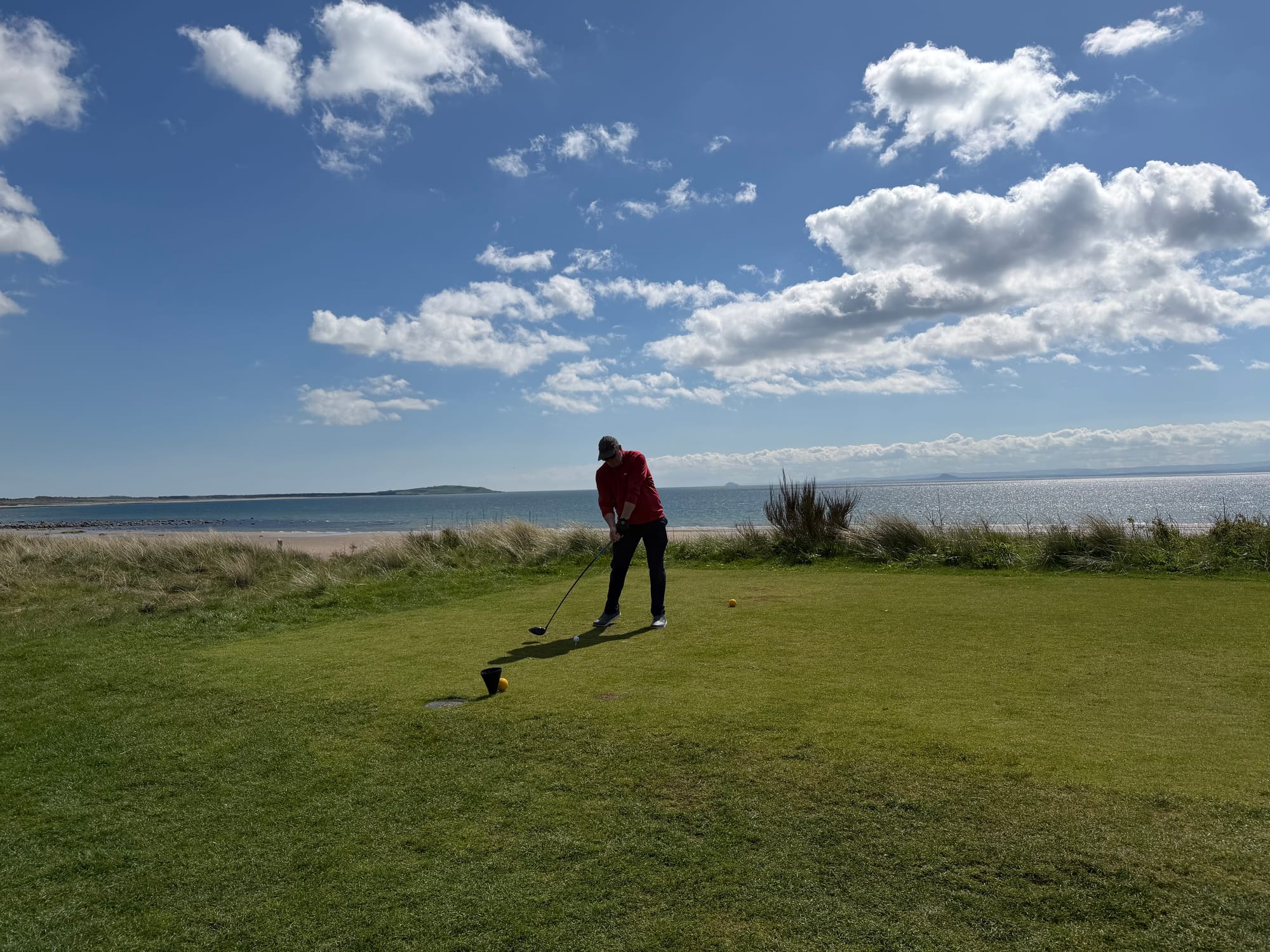
Crail Golfing Society was founded in 1786, making it the seventh-oldest golf club in the world. We played the Balcomie course, 18 holes laid out by Old Tom Morris himself in 1894.
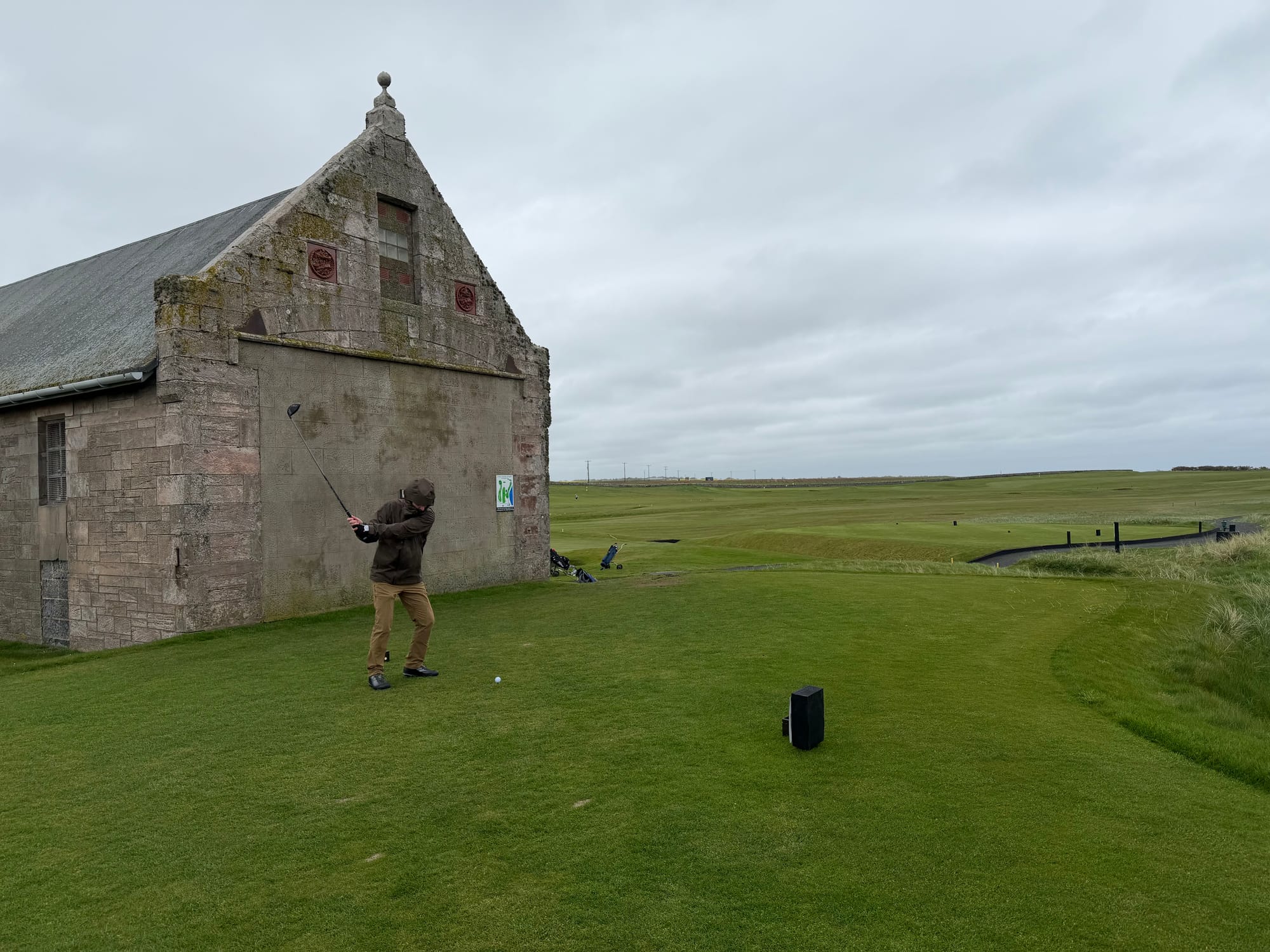
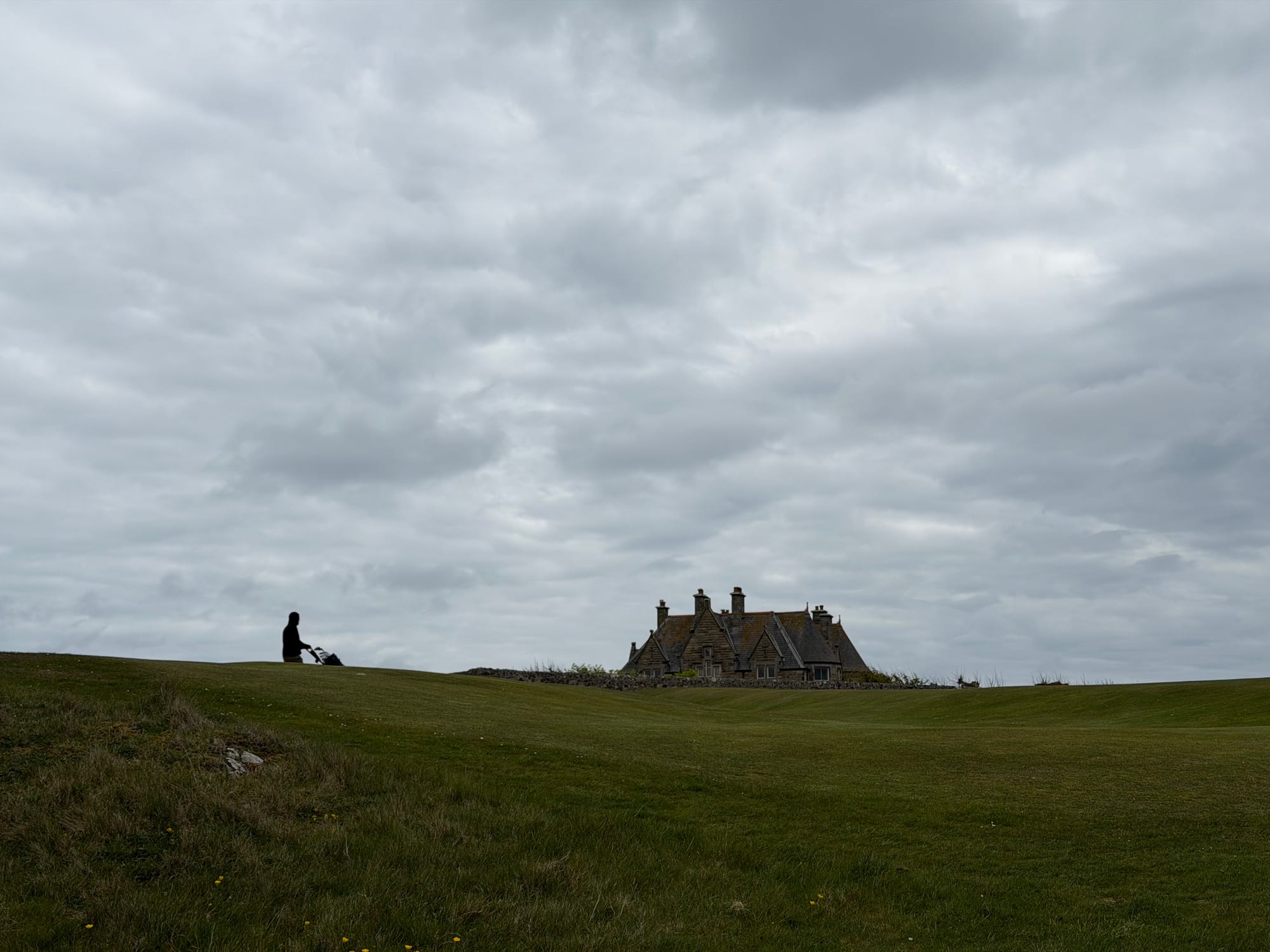
Despite the chilly weather, the course was a delight. It winds through the rolling seaside property, unfolding in unexpected ways: back-to-back par fives, a blind uphill par three that basically calls for driver, some spectacular holes along the shore.
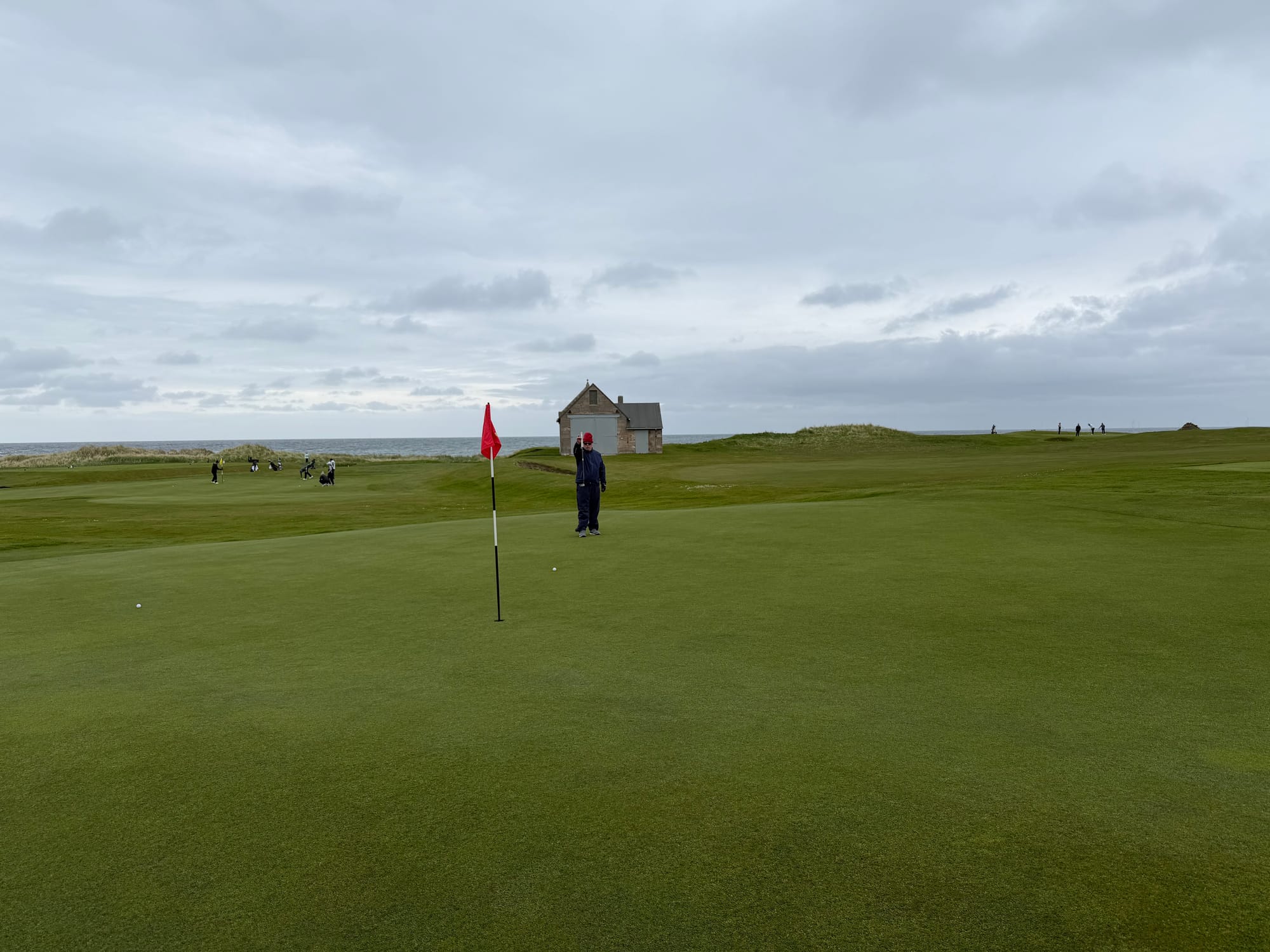
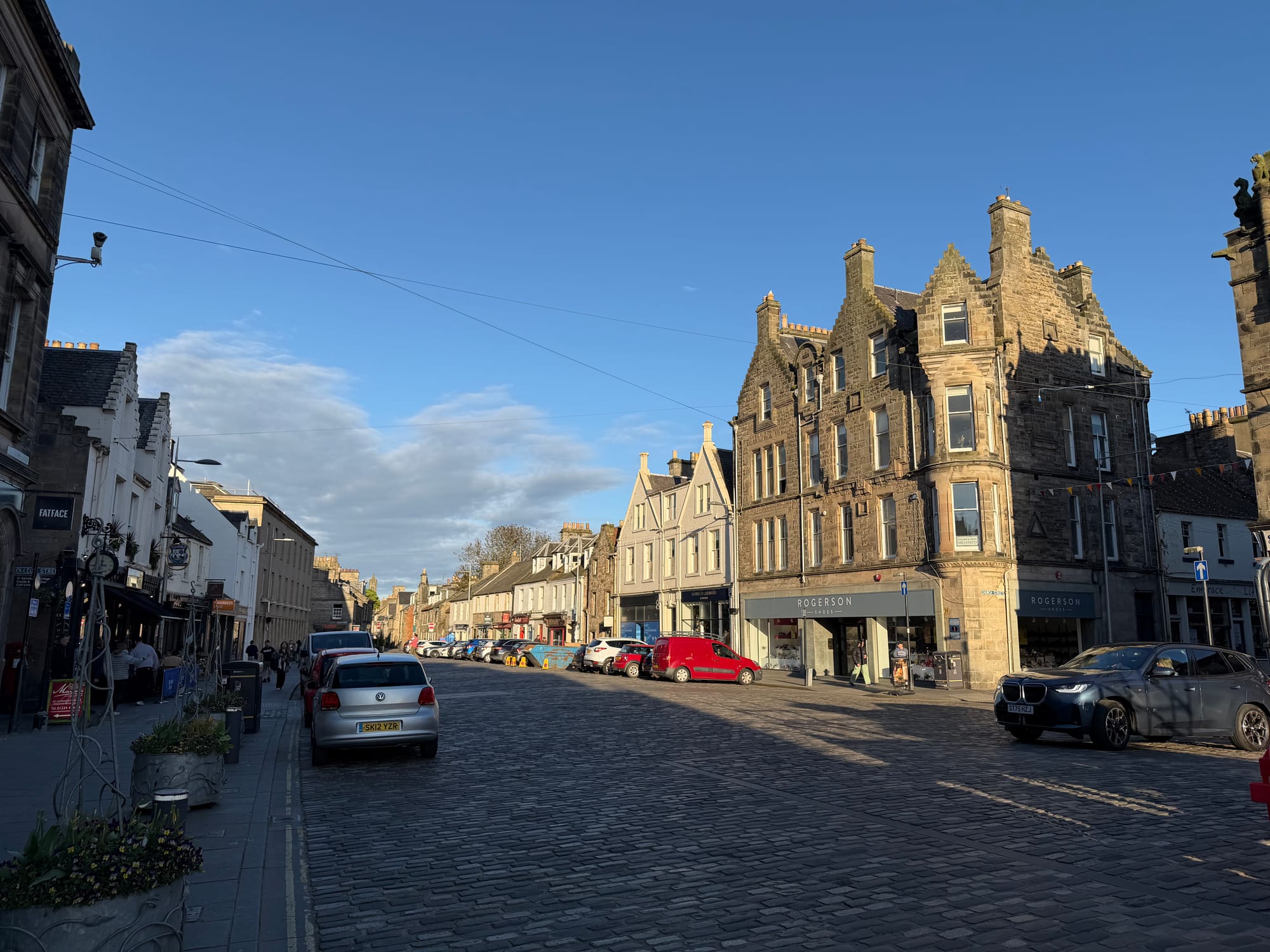
After the round, we drove through the beautiful Fife countryside to the village of St. Andrews, our home base for the next few days.
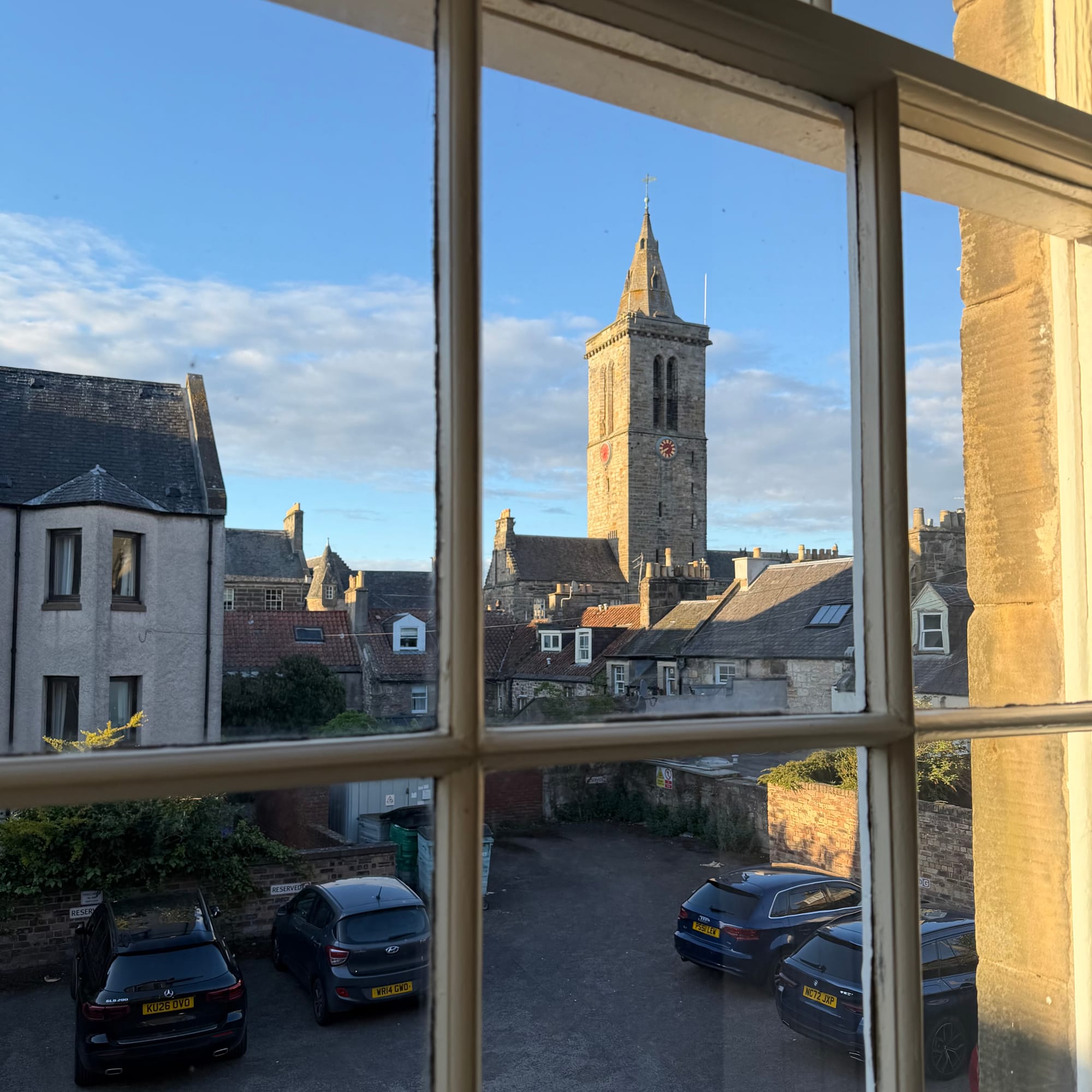
Unfortunately for us, the Old Course – about a 10-minute walk from our rental flat – was closed for play during our visit.
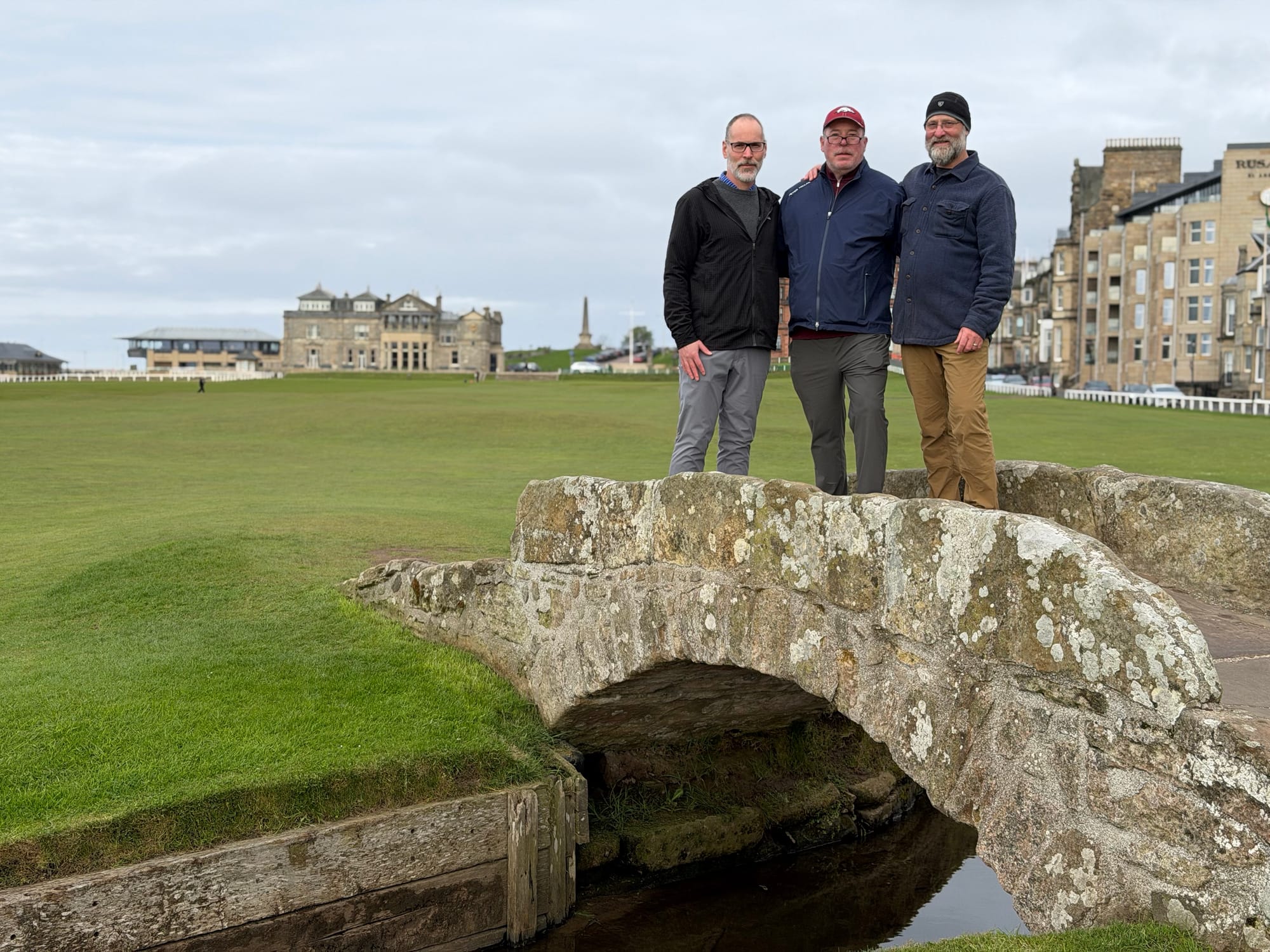
However, unlike most American tracks, it's open to the public each Sunday for anyone to wander – basically, a giant de facto park. We took the opportunity to explore the storied grounds, grabbing the classic photo-op on the iconic Swilcan Bridge.
The next morning, we embarked for Lundin Links, about 20 miles to the south, for our next round.
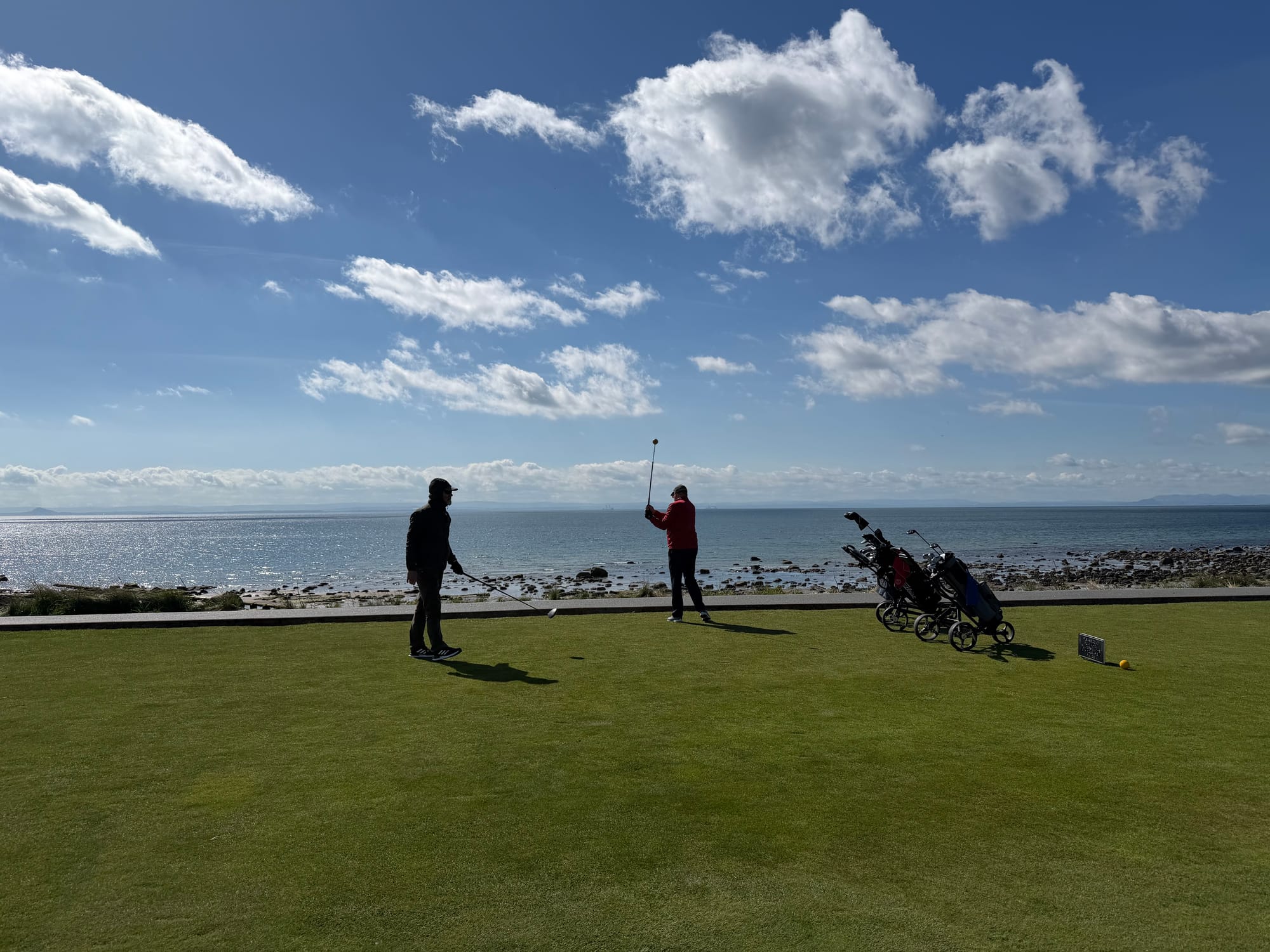
Founded in 1868, Lundin Golf Club isn't quite as old as Crail. But it's still pretty interesting. It originally shared a course with neighboring Leven Golf Club, and members played from opposite ends.
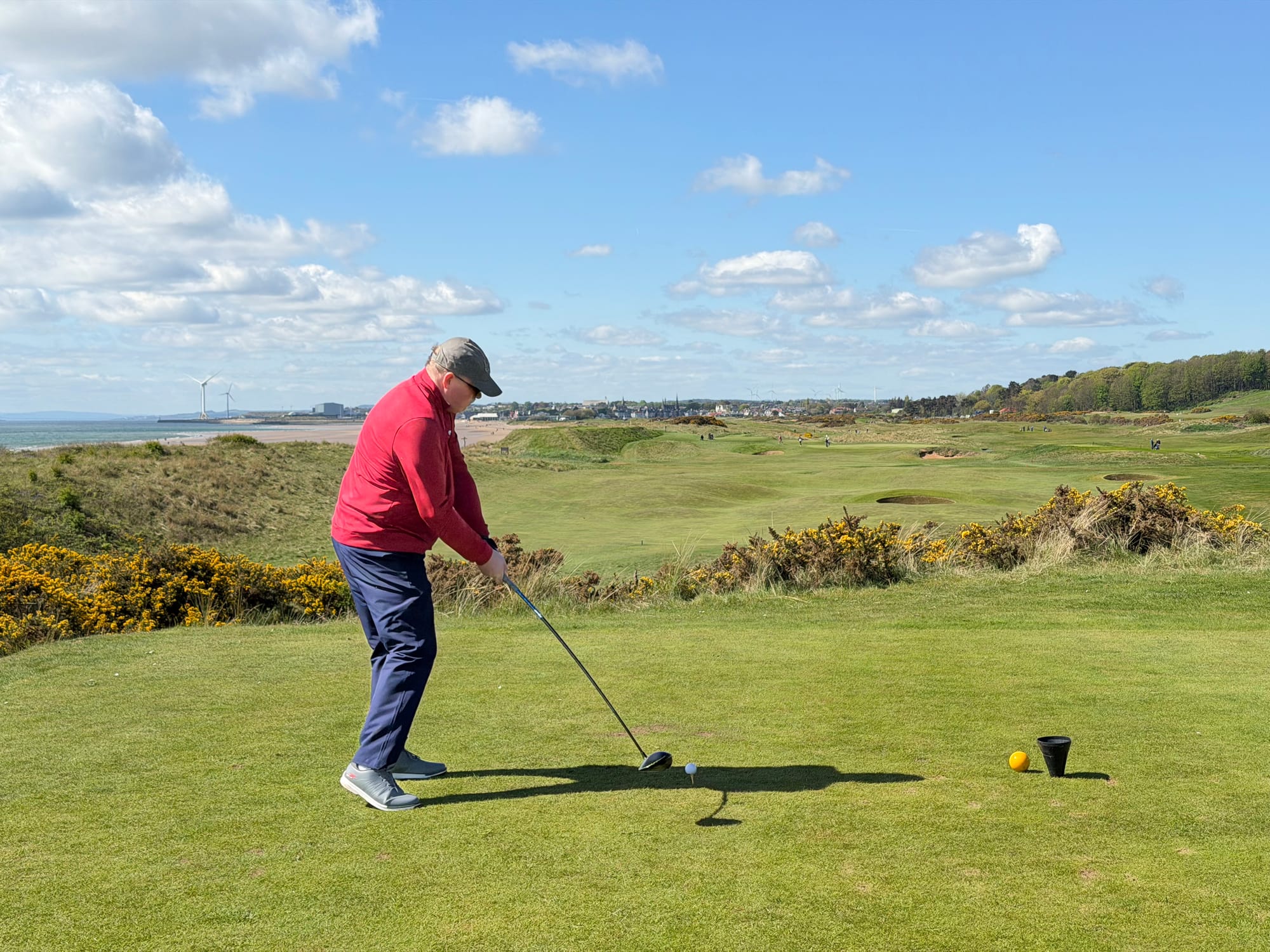
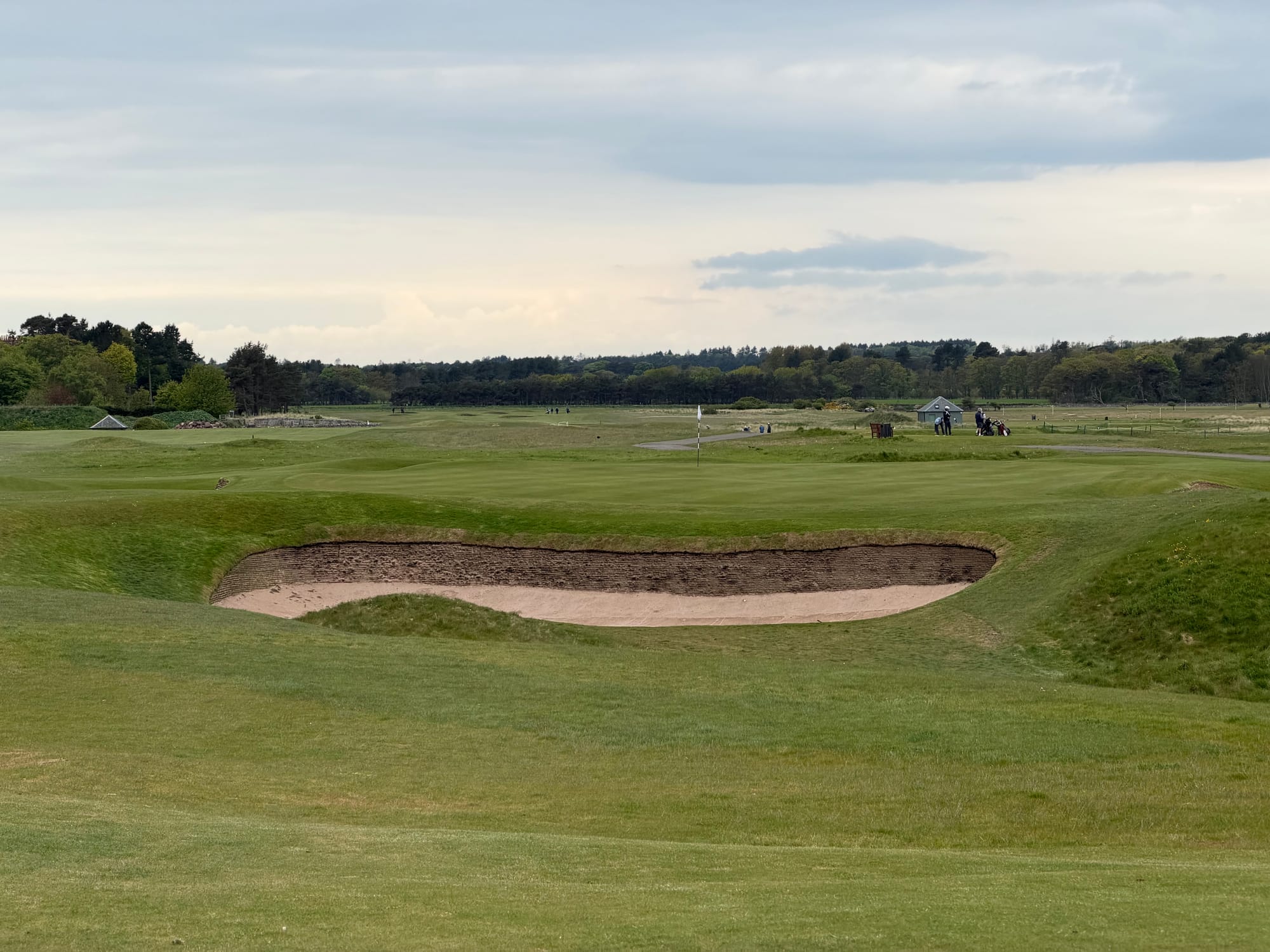
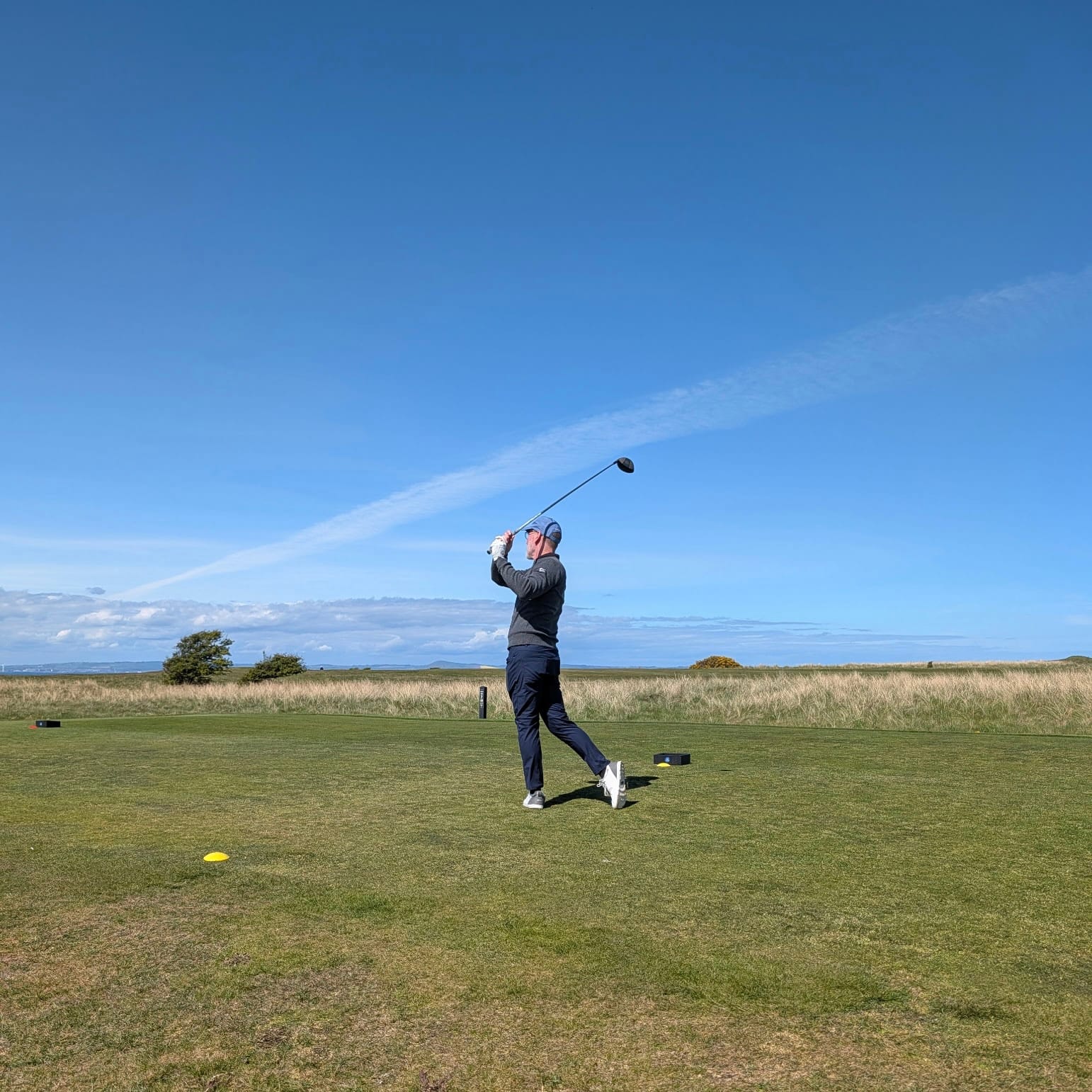
Lundin is considerably more difficult than Crail, giving us our first real taste of gorse, rough, and pot bunkers. Thankfully, we had terrific weather – bright sun and temperatures in the low 60s.
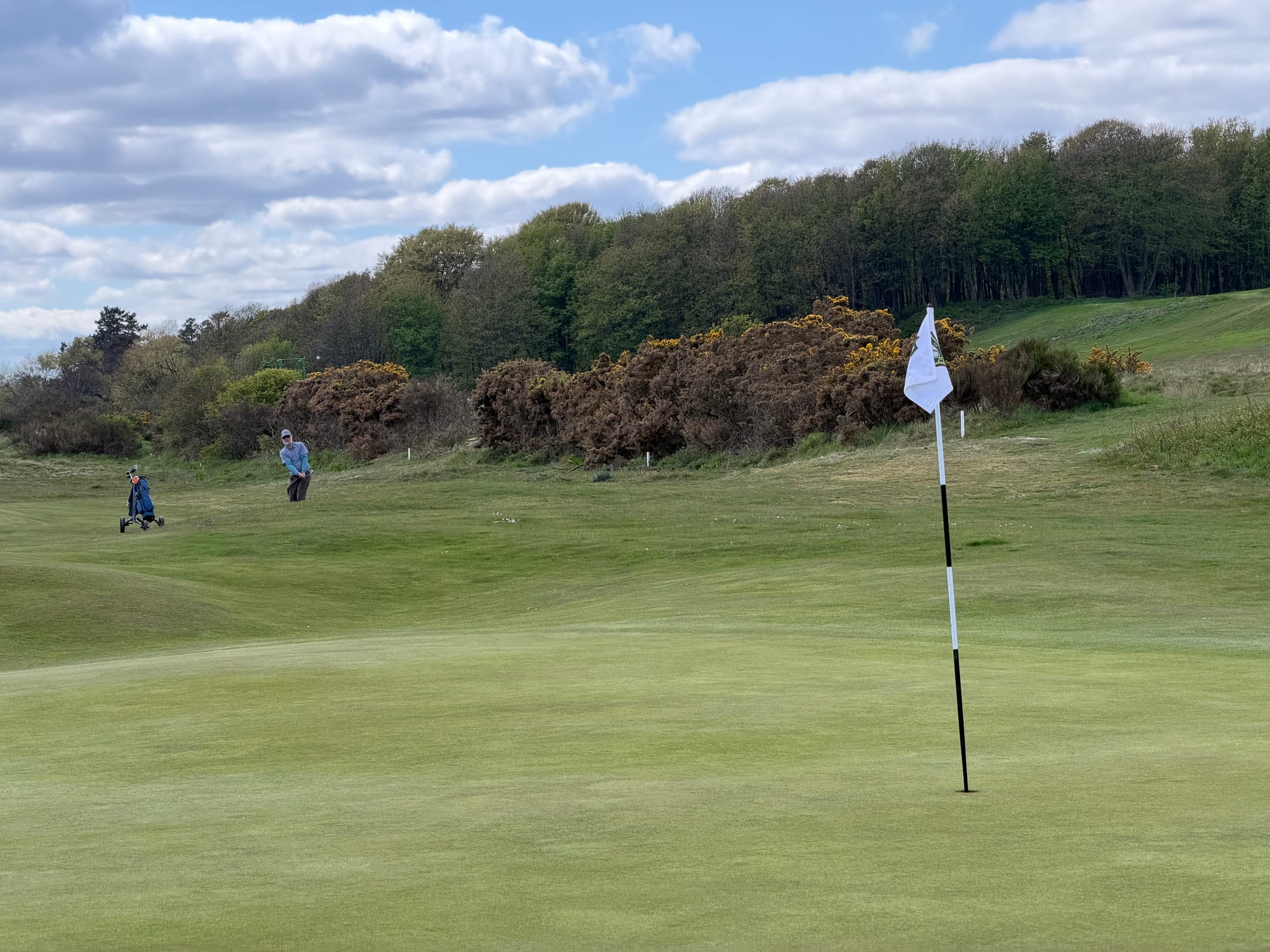
Despite opening with two double bogeys, I managed to bat it around pretty effectively, highlighted by my approach into 18 – a wind-piercing 7-iron punch that bounded onto the green to about 5 feet, earning a round of applause from the group on the first tee. (Of course, I missed the putt!)
But it was our third and final round in the Kingdom of Fife that was the real golf highlight for me: Elie Golf Club.
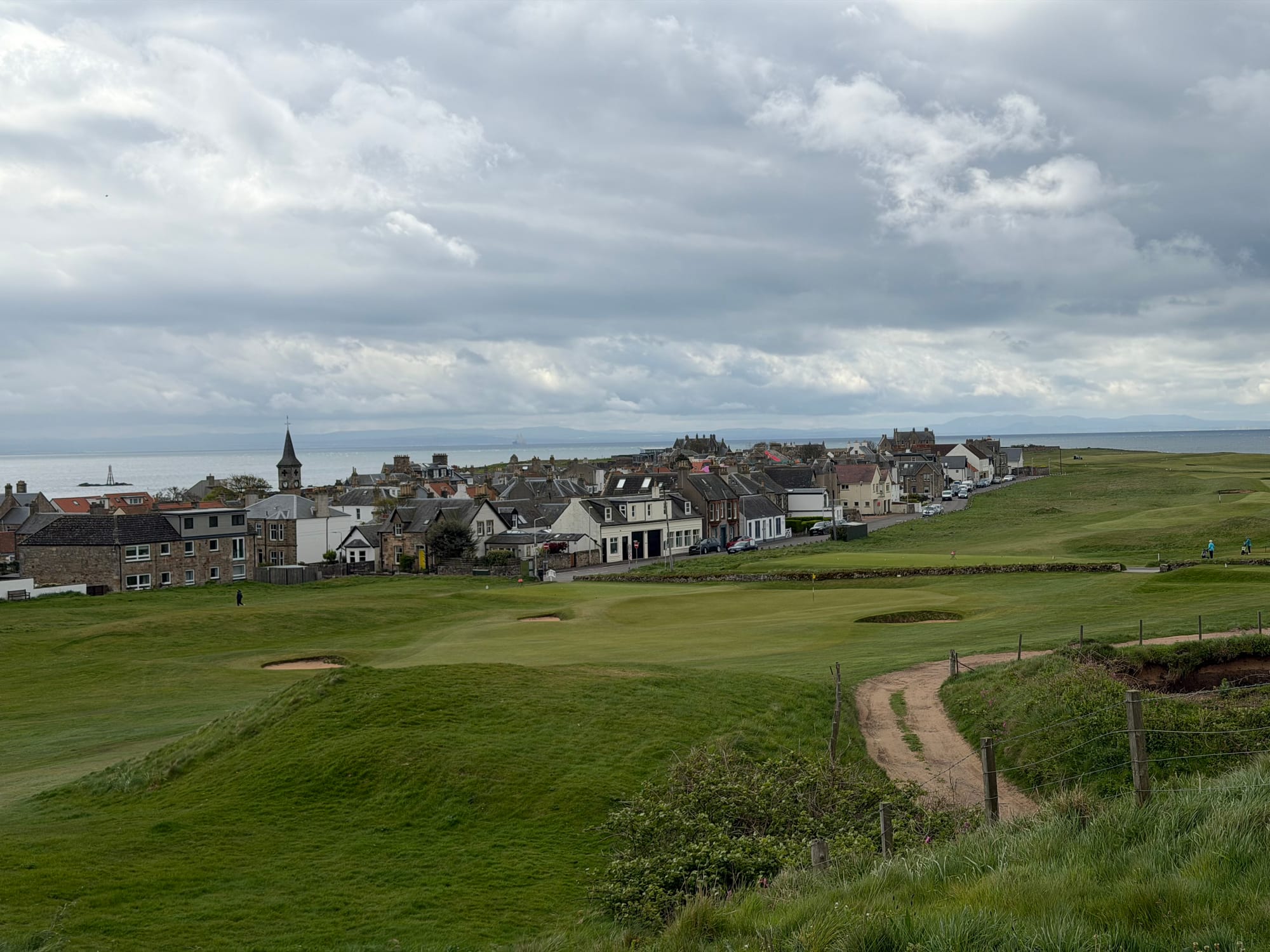
Apparently, golf has been played on the linksland around the village of Elie since the 1500s, though the current 18 emerged "only" in 1895, again by the masterful hand of Old Tom Morris.
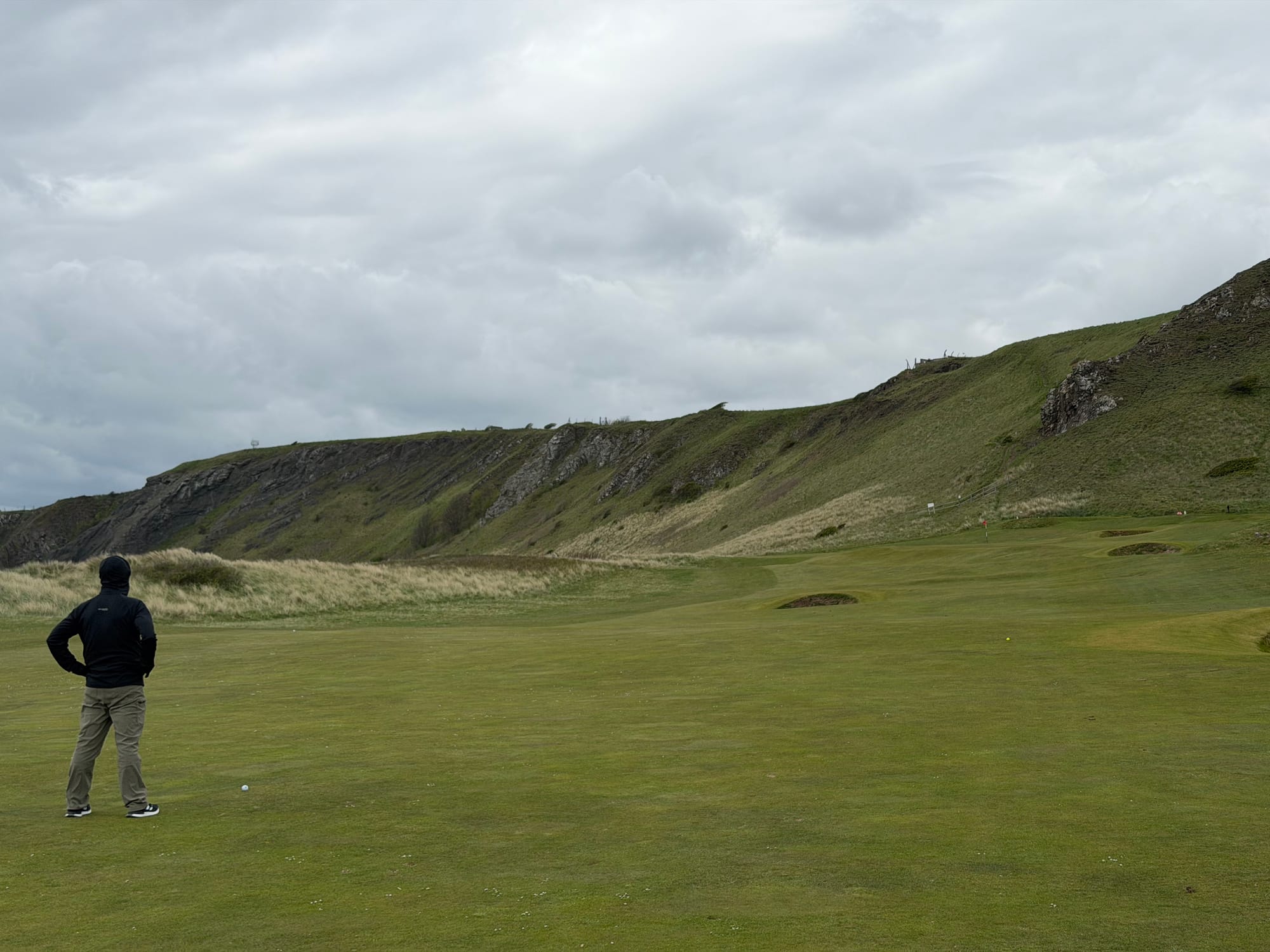
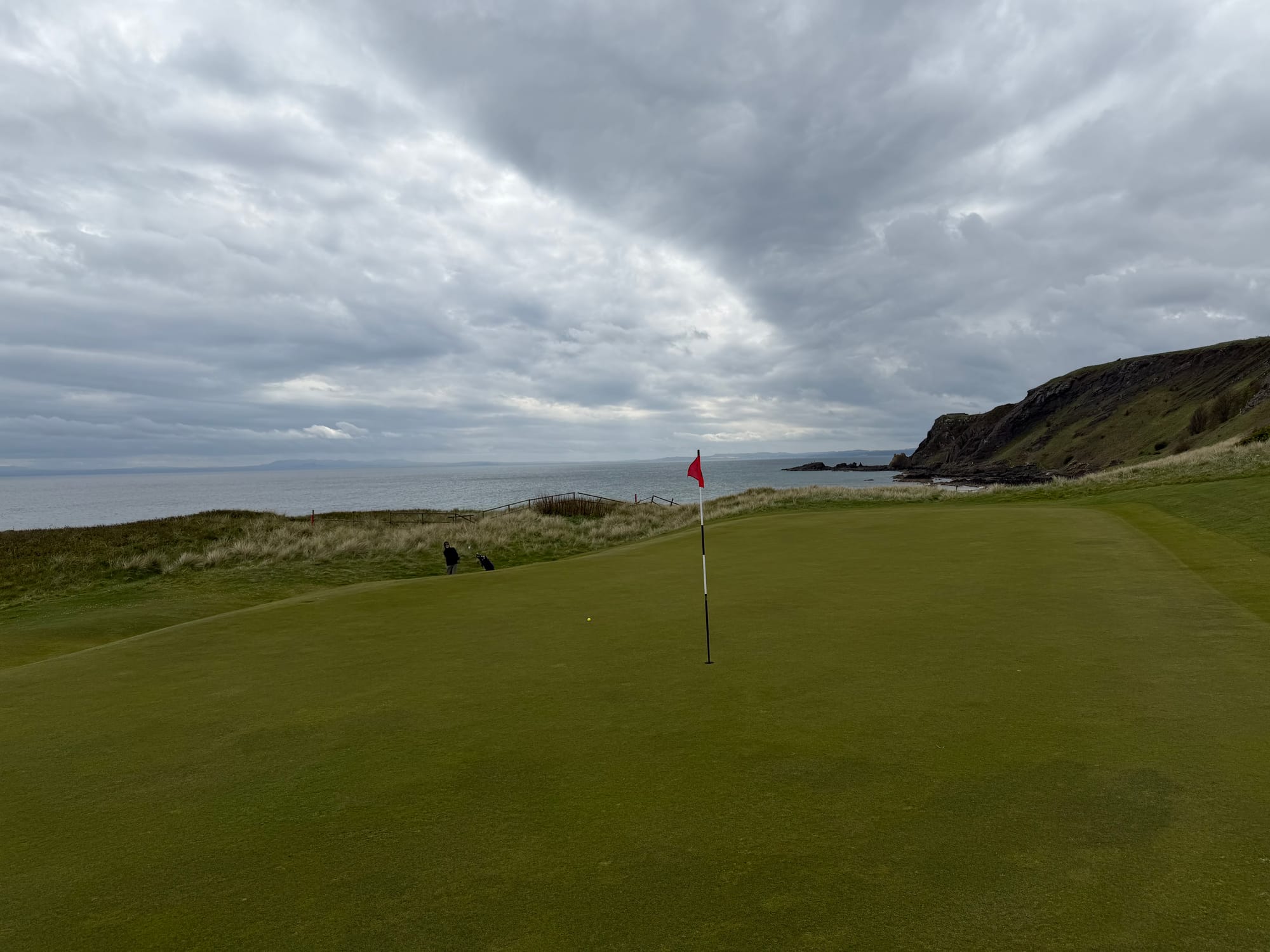
We had another cold day – even the locals remarked upon it. But being bundled up in a stocking cap and rain jacket could not suppress the sheer delight I felt as the course unfolded before me like a story. And it was a page turner. As each hole came to a close, I couldn't wait to see what was coming next.
If I could choose one course to play for the rest of my life, this would be it.
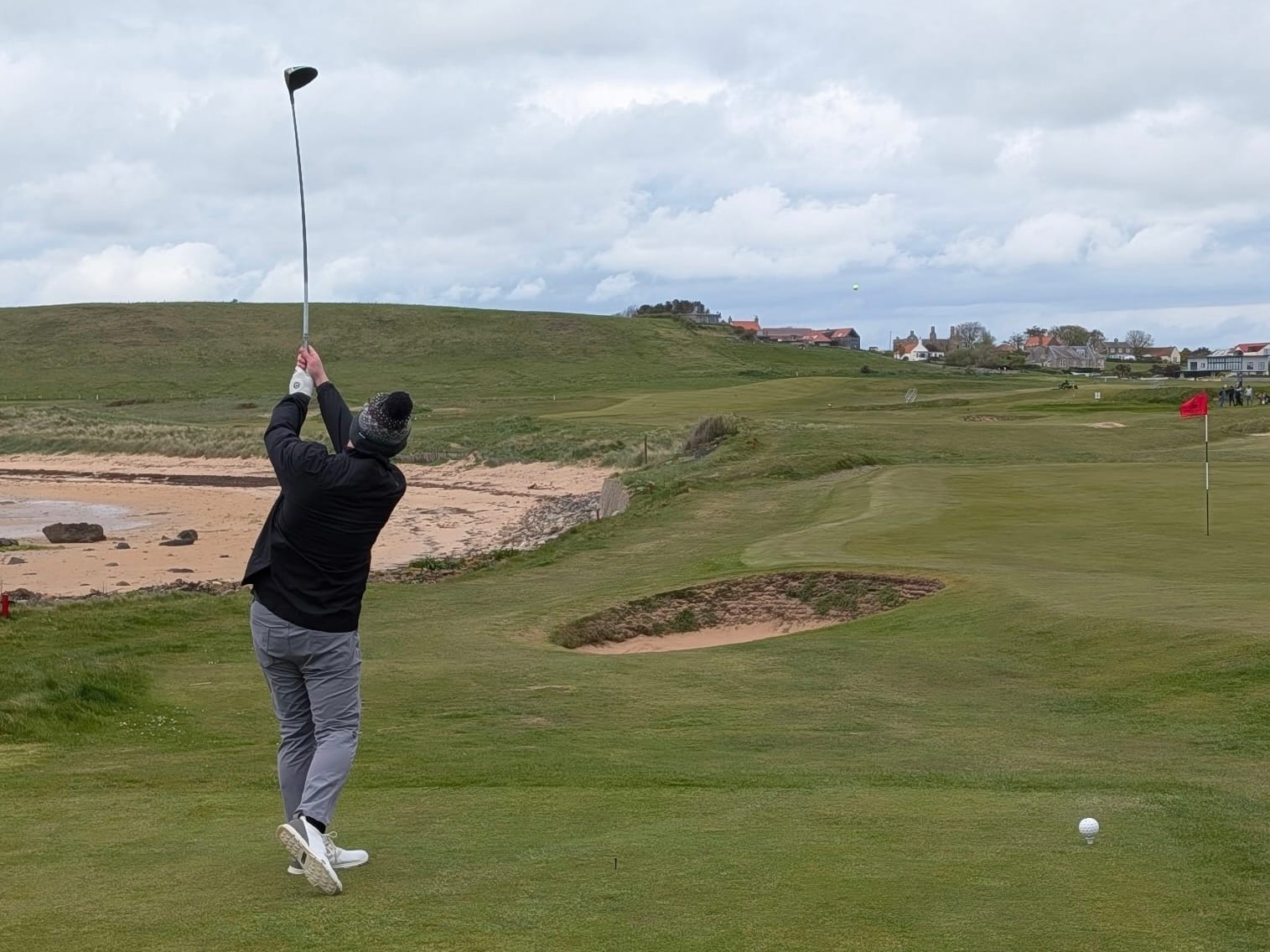
We finished off the round with one of the best burgers I've ever had at the nearby Ship Inn. Highly recommended.
The next morning, we loaded the little Benz back up and headed back around the Firth of Forth to our next stop.
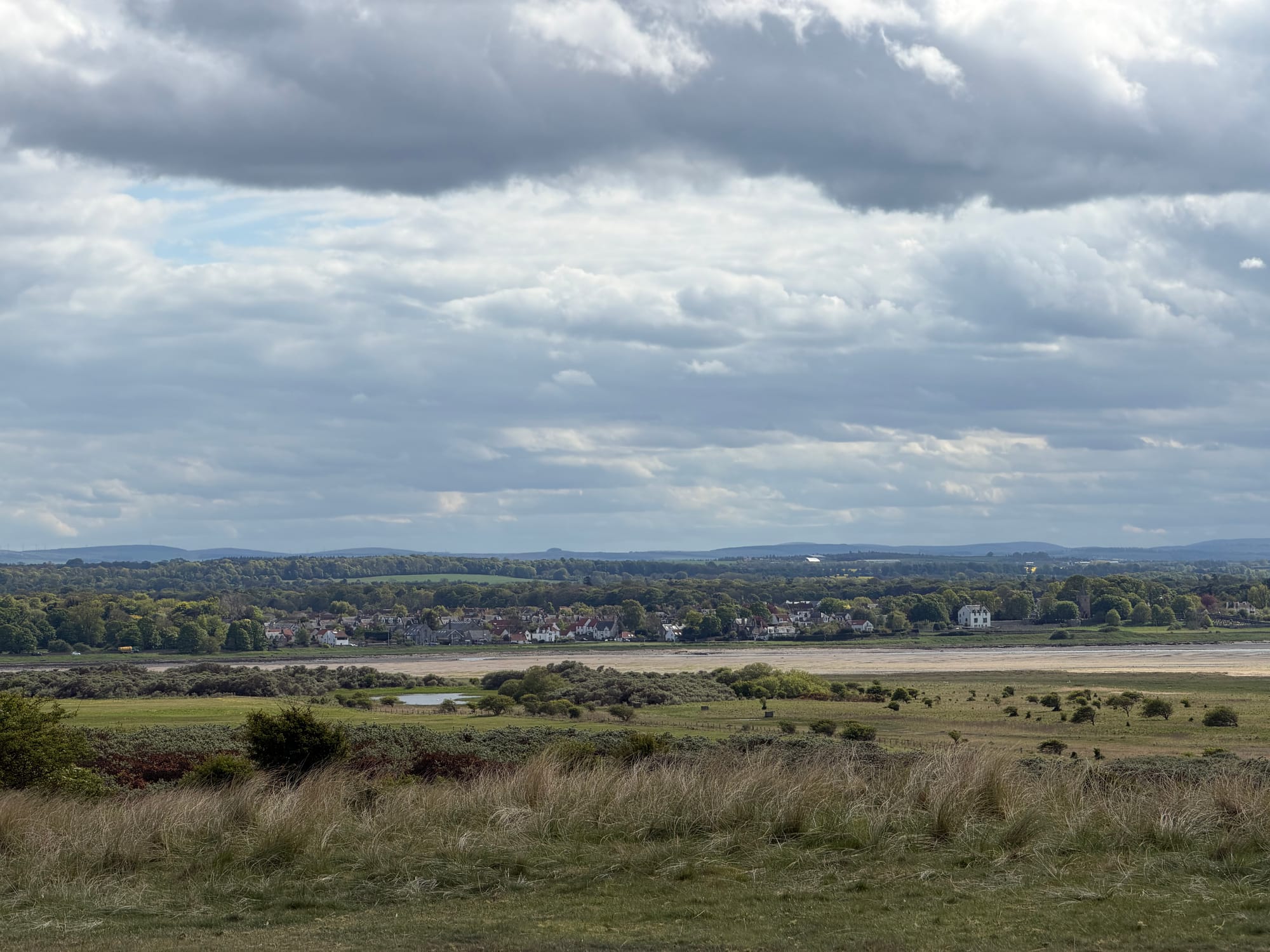
Located on the Firth's south shores (on the other side of Edinburgh), Gullane Golf Club is part of a stretch known as Scotland's "Golf Coast" that includes Muirfield, a swanky private club that is not only the oldest in the world but also has hosted the Open Championship 16 times.
We didn't pack our plus-fours, so Muirfield was not in the cards for us. No matter. The golf on this side of the bay did not disappoint.
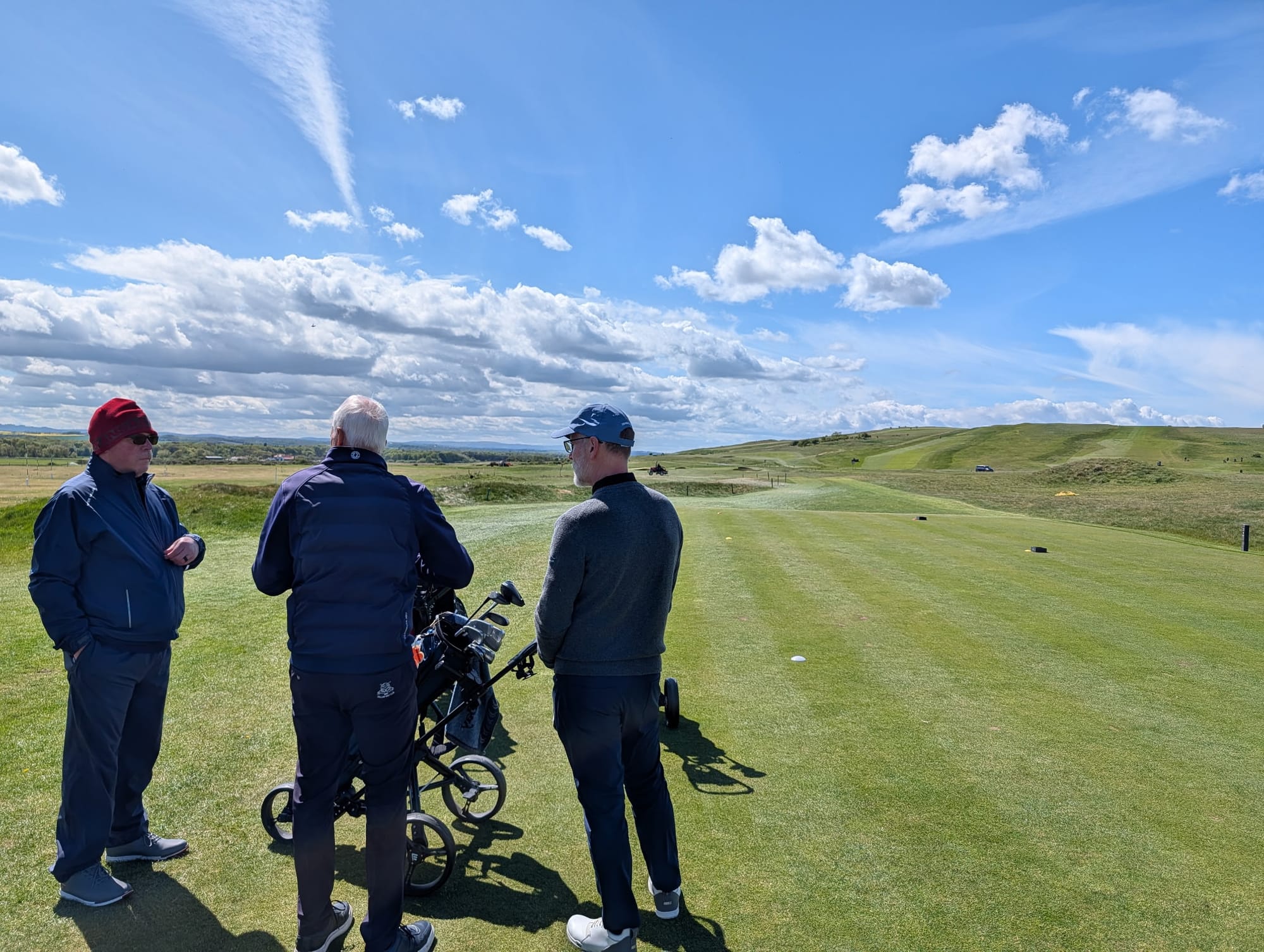
First up was Gullane No. 2. The quirky little brother to the more demanding No. 1, this route begins by climbing a massive hill before descending to the sea and winding its way back.
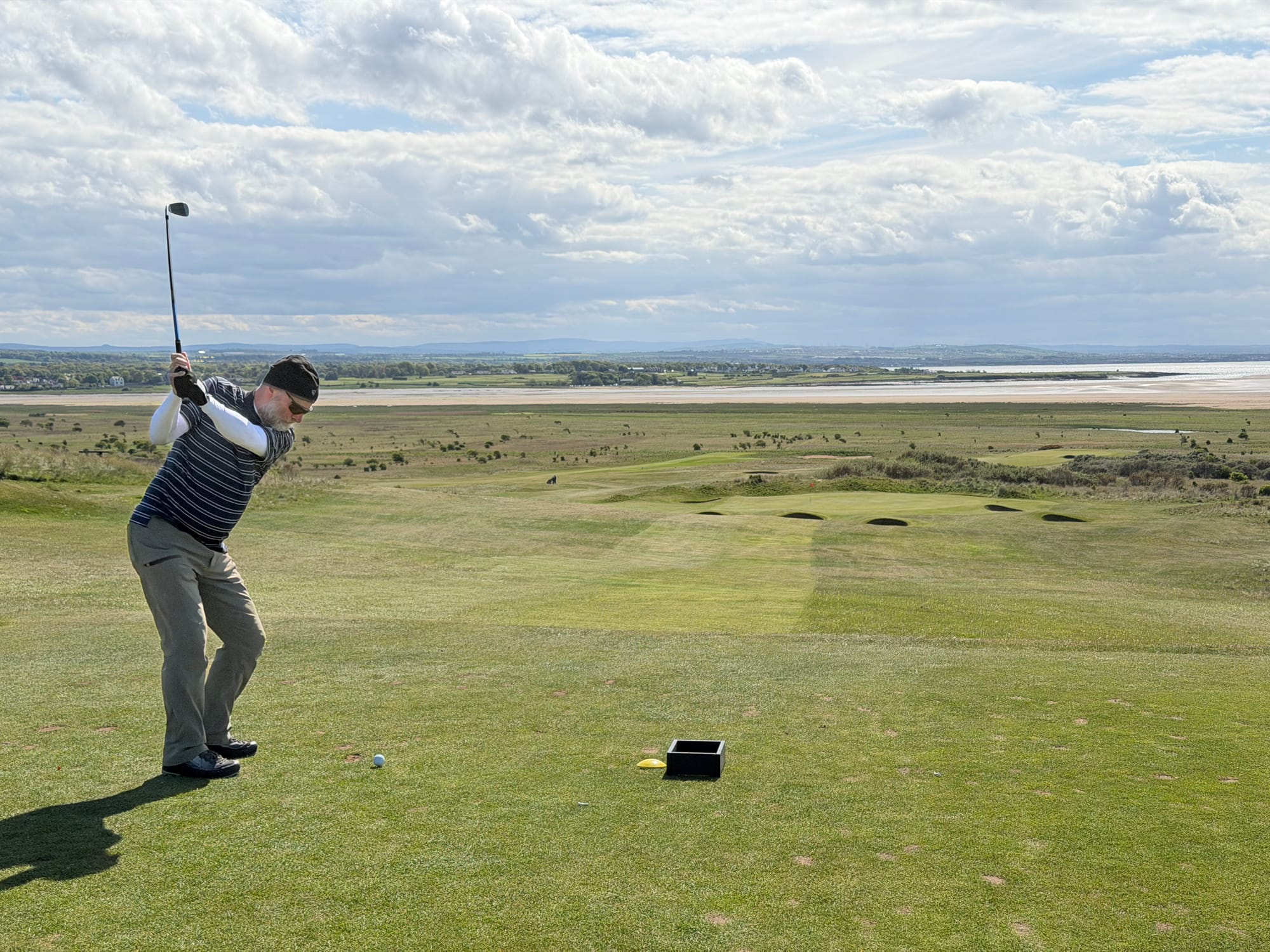
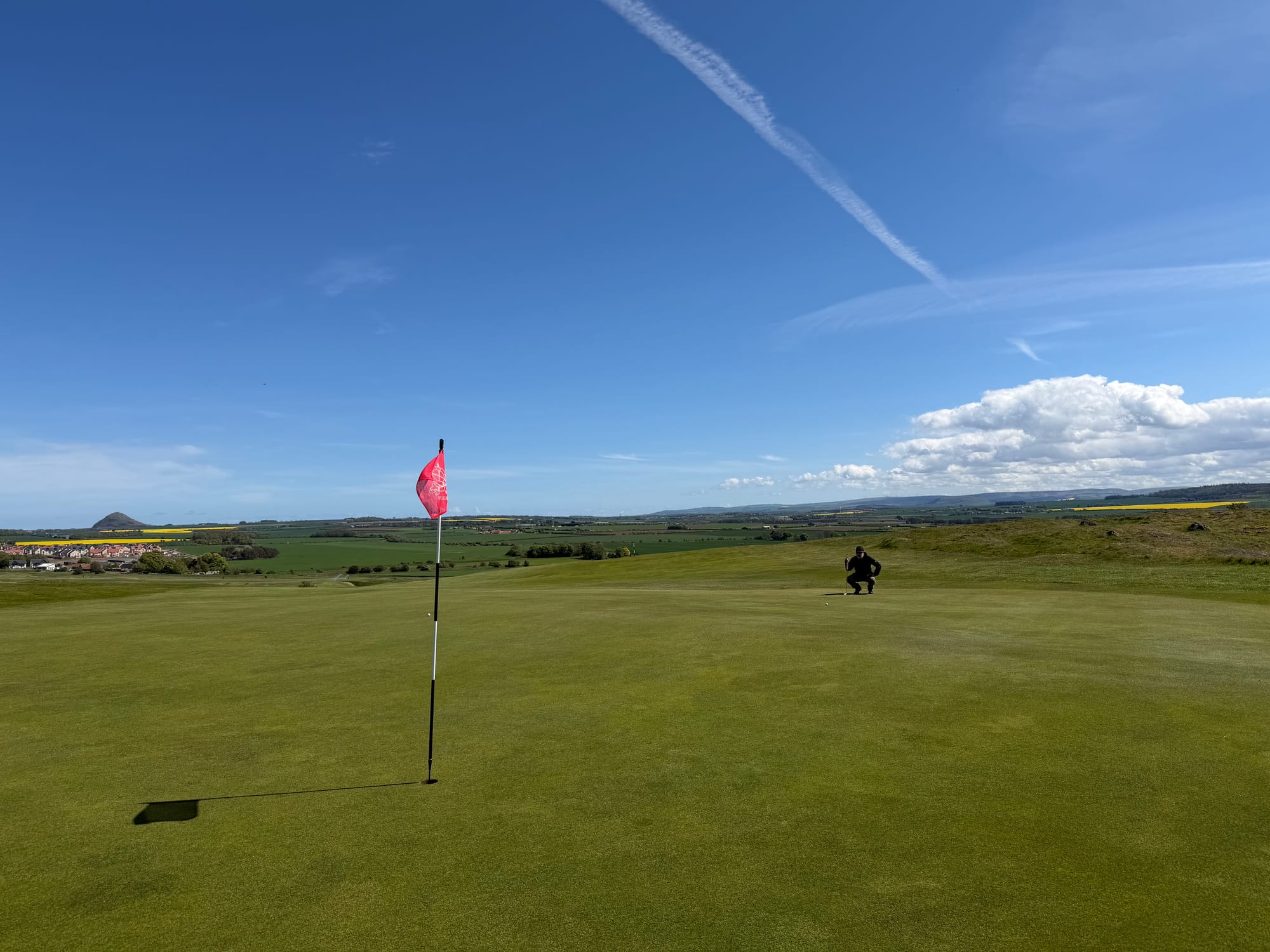
None of us played particularly well at Gullane. But it was still a beautiful walk, highlighted by commanding views of the Firth, the town, and the surrounding countryside.
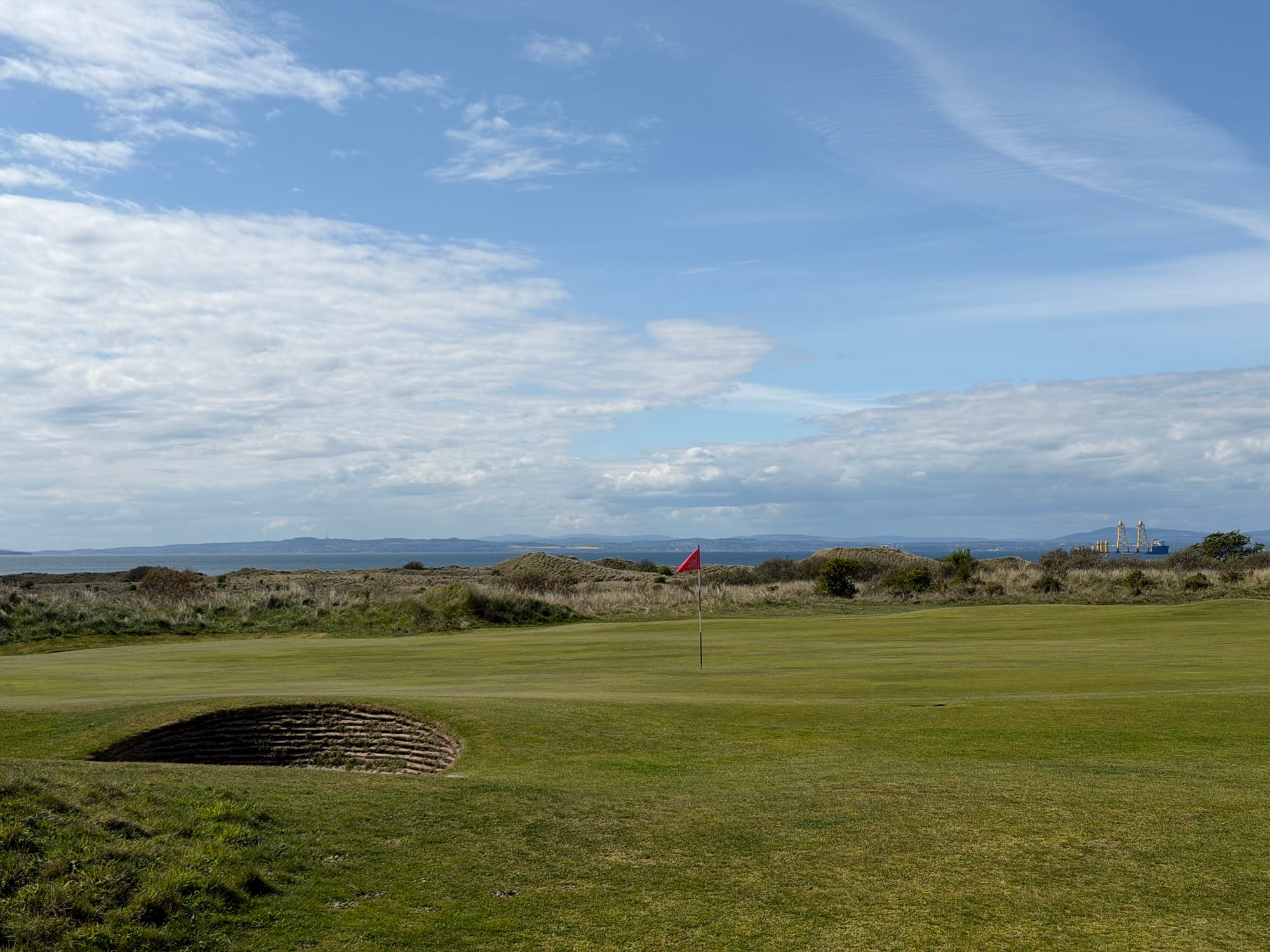
Afterward, we nursed our bruised egos with a delicious Italian meal at The Main Course in the tiny village of Gullane.
Day five of the trip promised to be a doozie: North Berwick Golf Club, the world's 13th-oldest golf club and one of the most celebrated in Scotland.
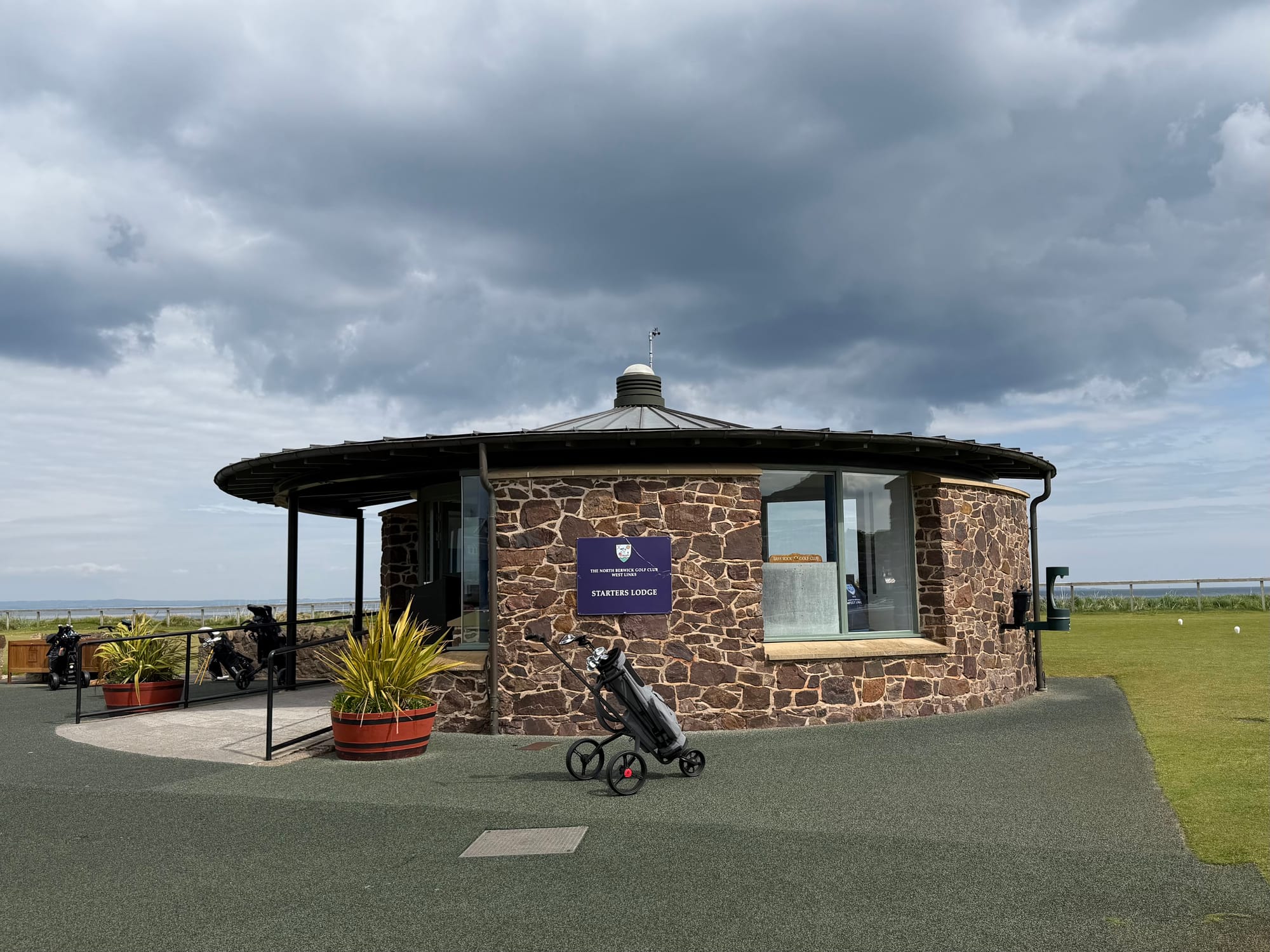
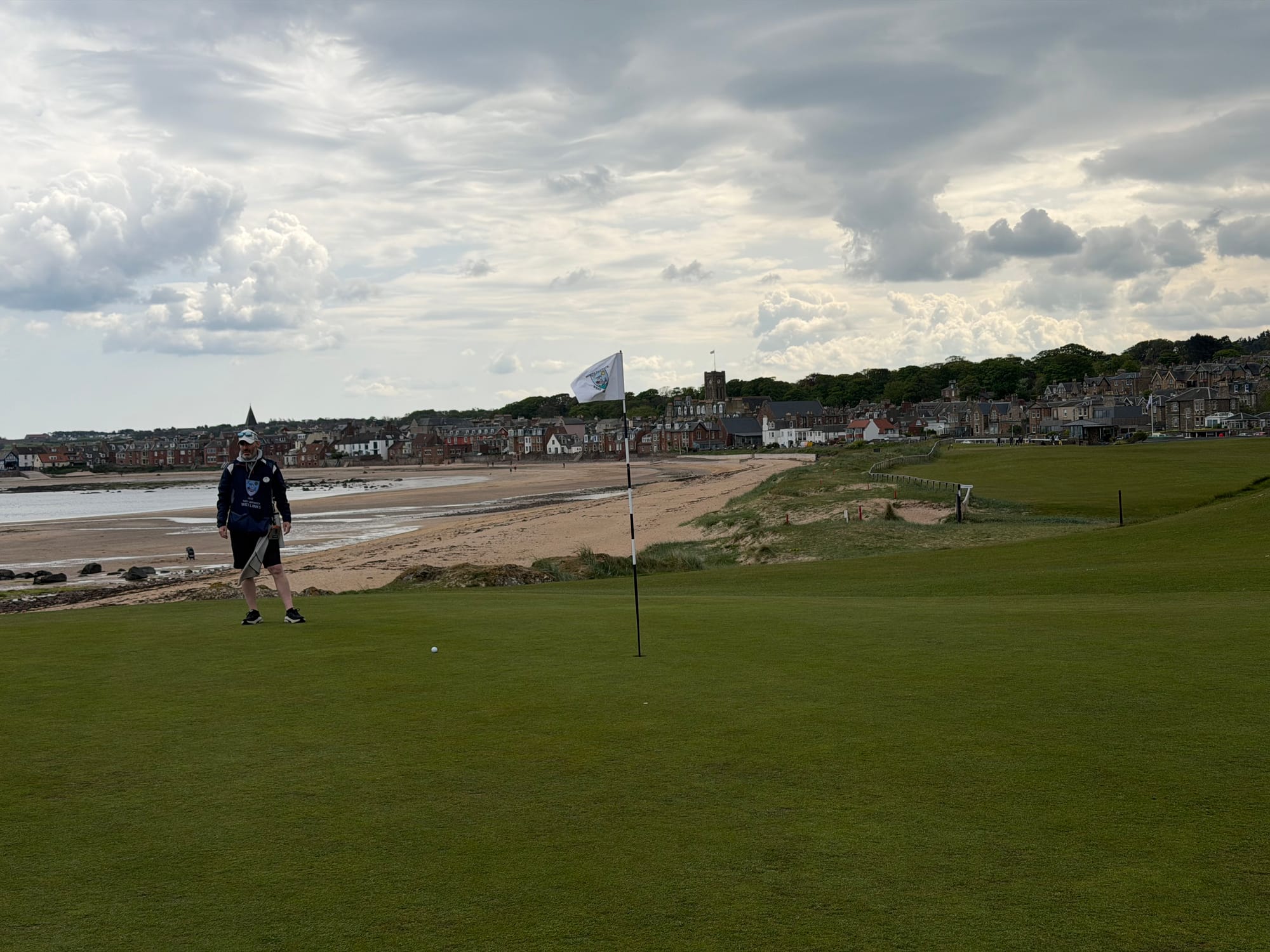
We splurged for a forecaddie on this round since the course is well-known for its tricky layout, which includes blind shots, walls traversing the fairways, and, of course, gargantuan bunkering. It was money well spent.
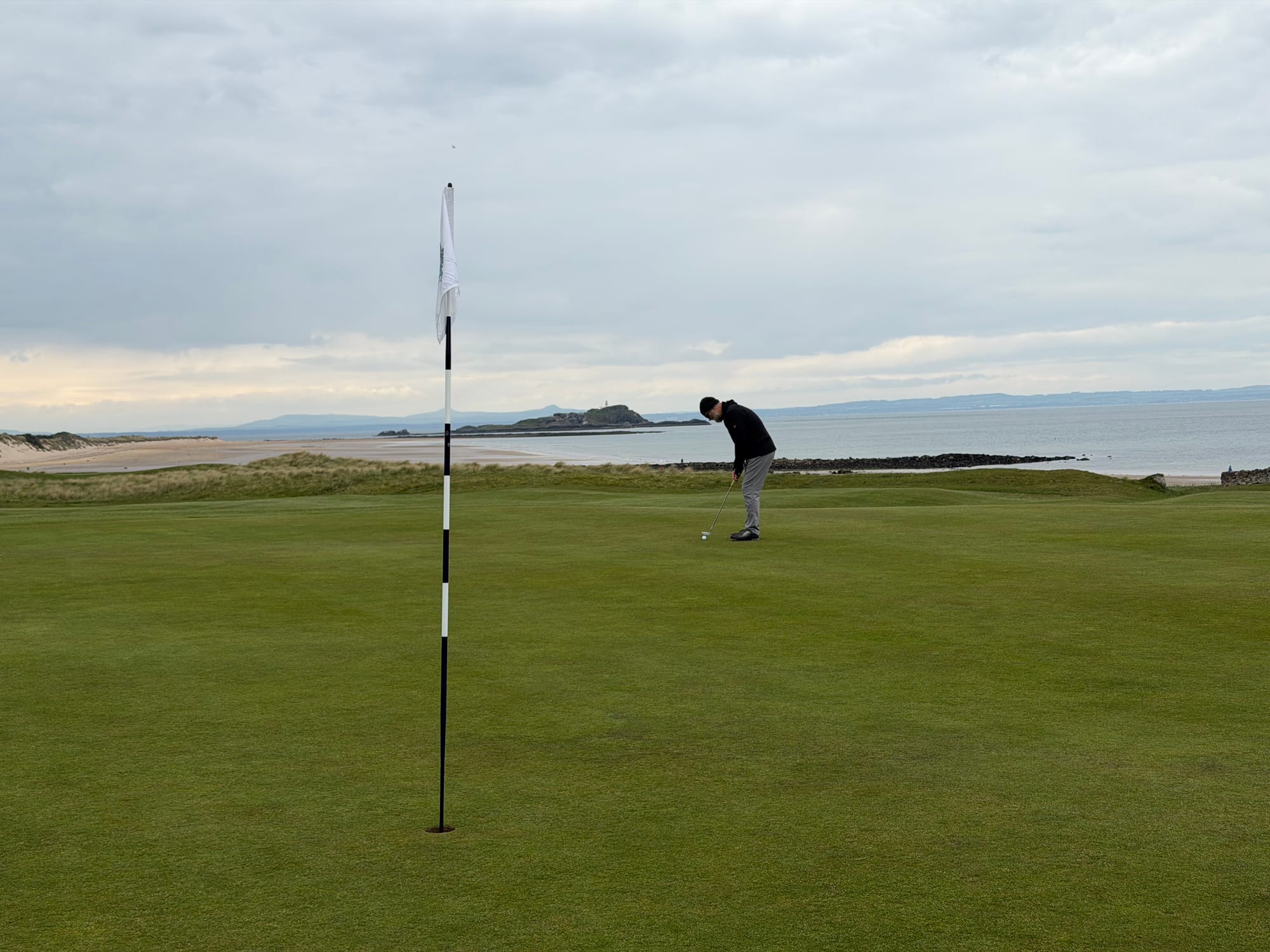
James guided us expertly through its challenges, sprinkling in some history lessons along the way. The town of North Berwick apparently became a popular Victorian resort destination with the advent of an 1850 railroad connection to nearby Edinburgh.
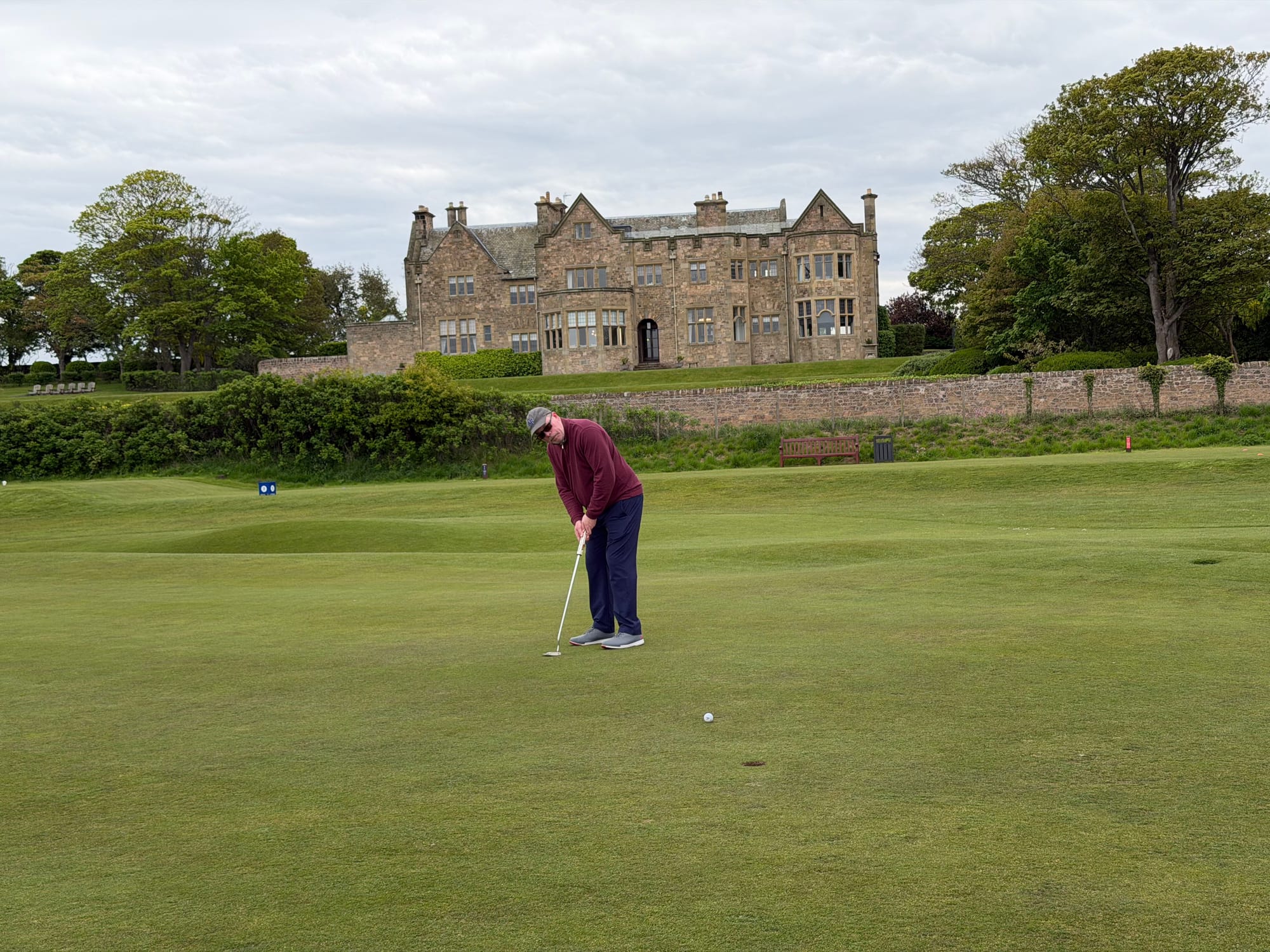
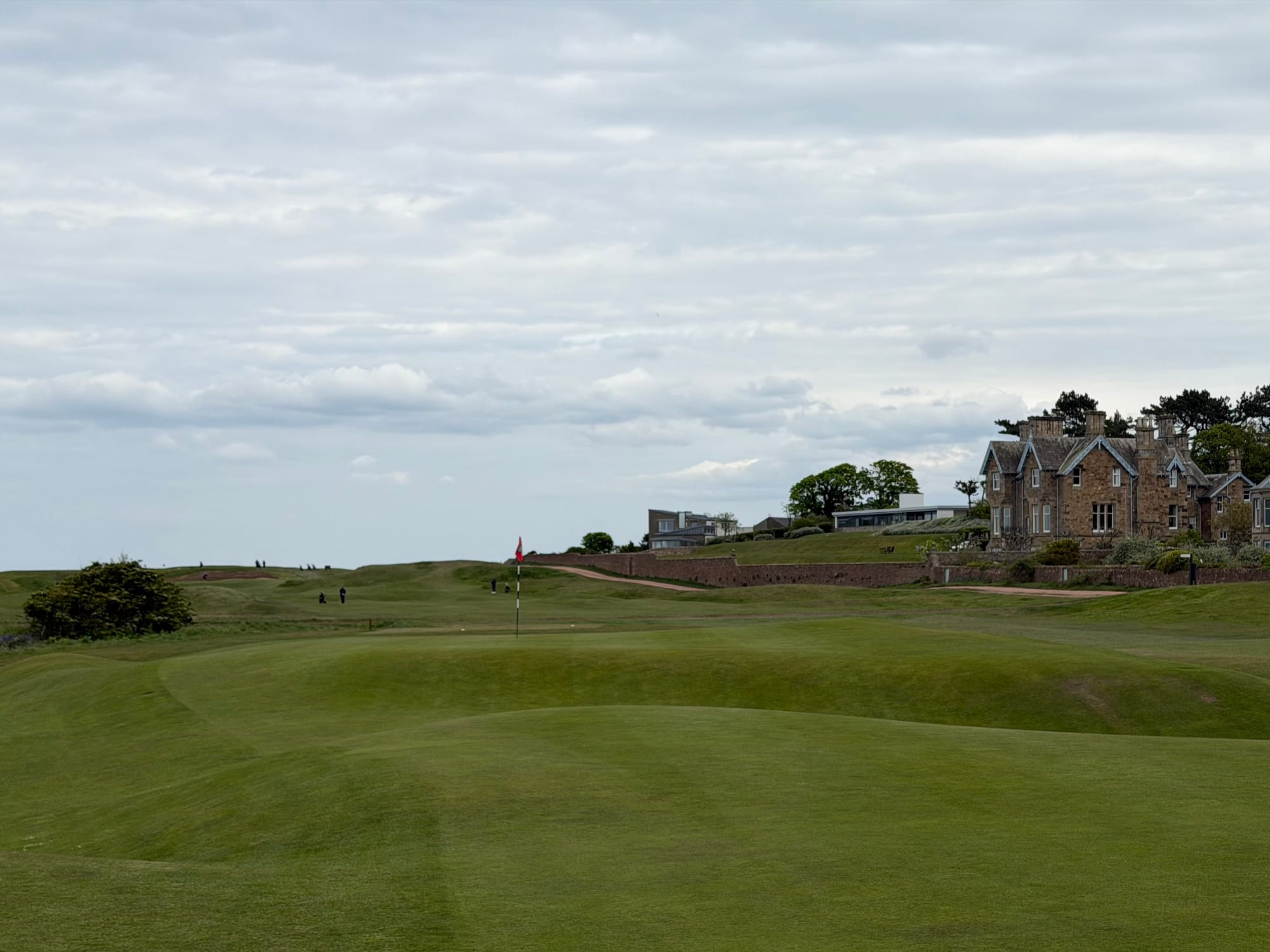
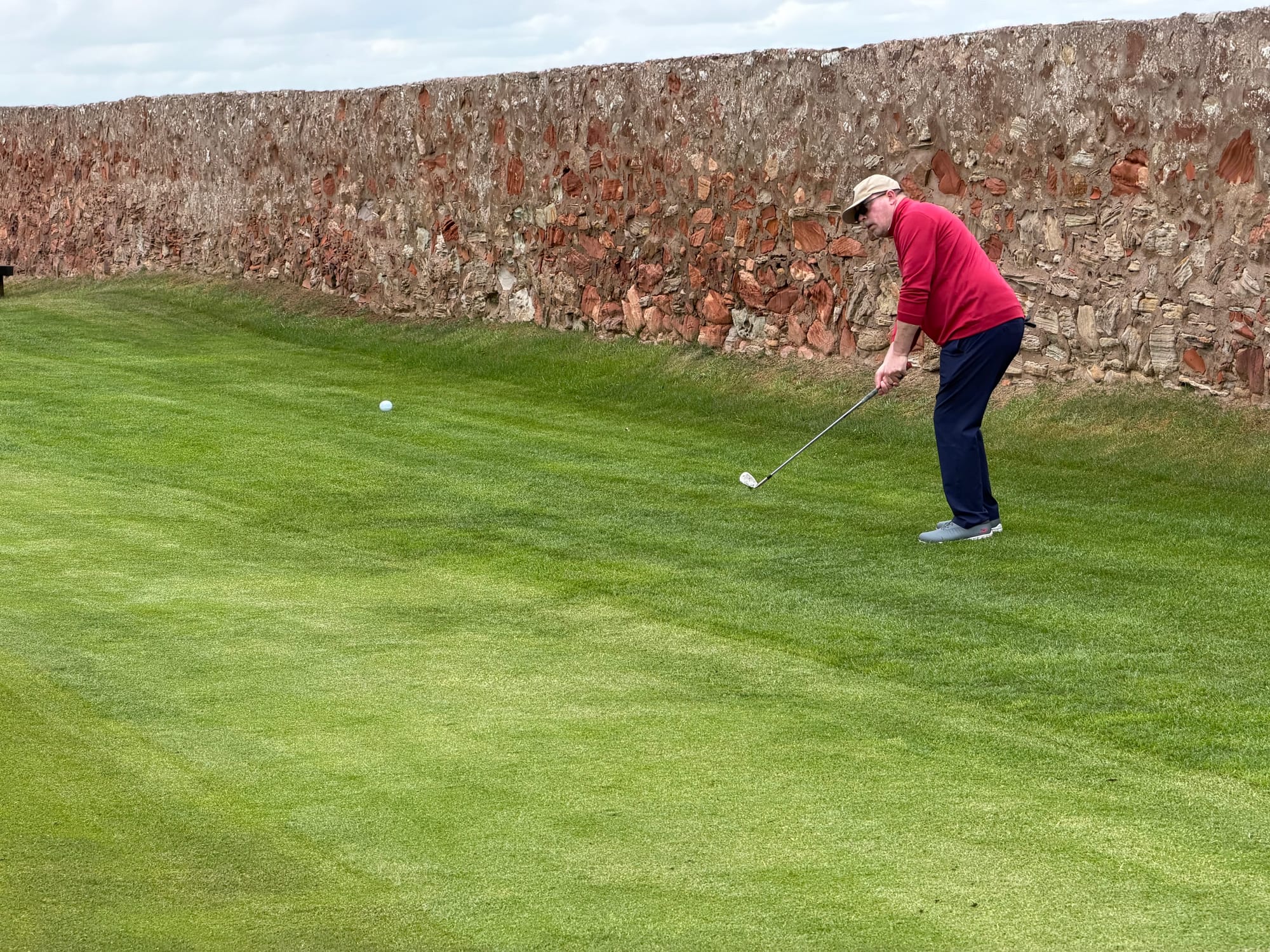
This influx of people and wealth is evident in the massive villas backing the course. It also explains the stone walls crossing the fairways in several places. The original layout was just six holes out to the town wall and back. In an 1868 expansion, the course grew while the wall remained.
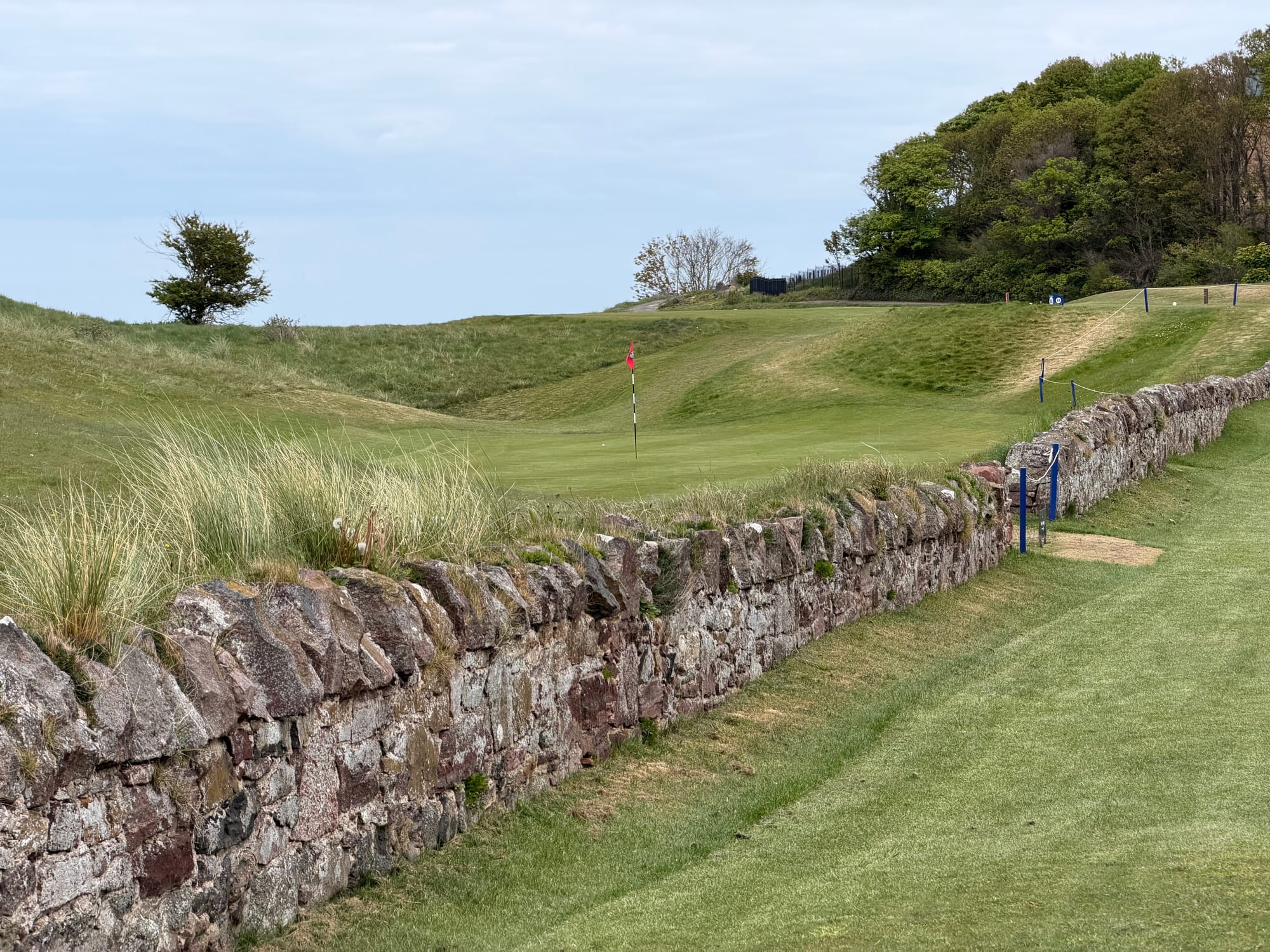
The crown jewel of North Berwick is the 15th, known as the Redan – a par three that's been copied countless times. Unlike most copies I've played, the original plays completely blind. You launch your tee shot over a deeply bunkered ridge, hoping to catch the right slope of the green, which feeds the ball down toward the pin.
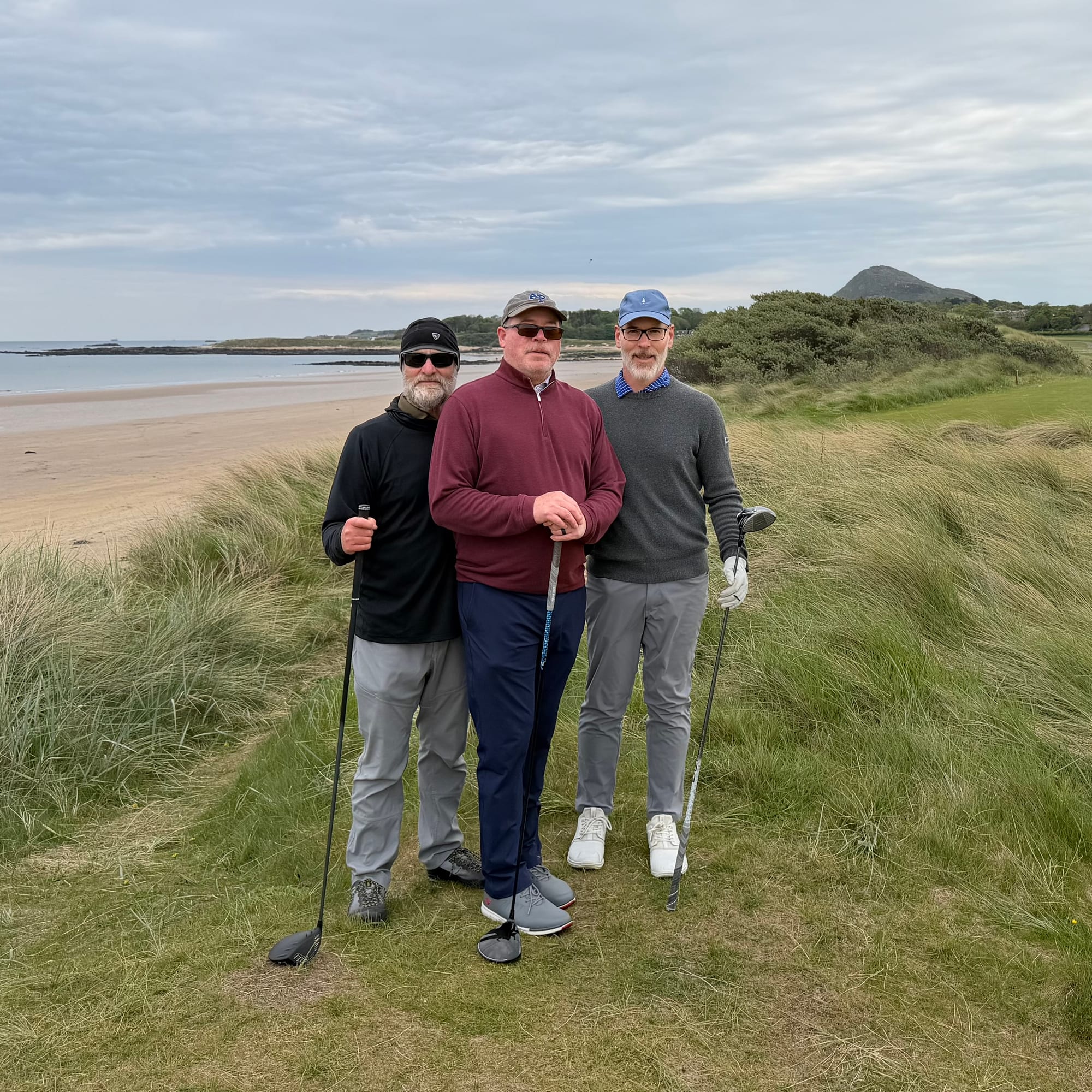
I almost played it perfectly. Almost. At about 180 yards into the wind, it took a mighty lash with a five iron for me to reach the green. But I pushed it just a touch and found myself in an impossibly deep greenside bunker. Fortunately, I managed to escape with a hard-won bogey.
At the end of the round, we bid farewell to James and were invited inside the charming, historic golf club for a complimentary drink. The only requirement was that we remove our caps.
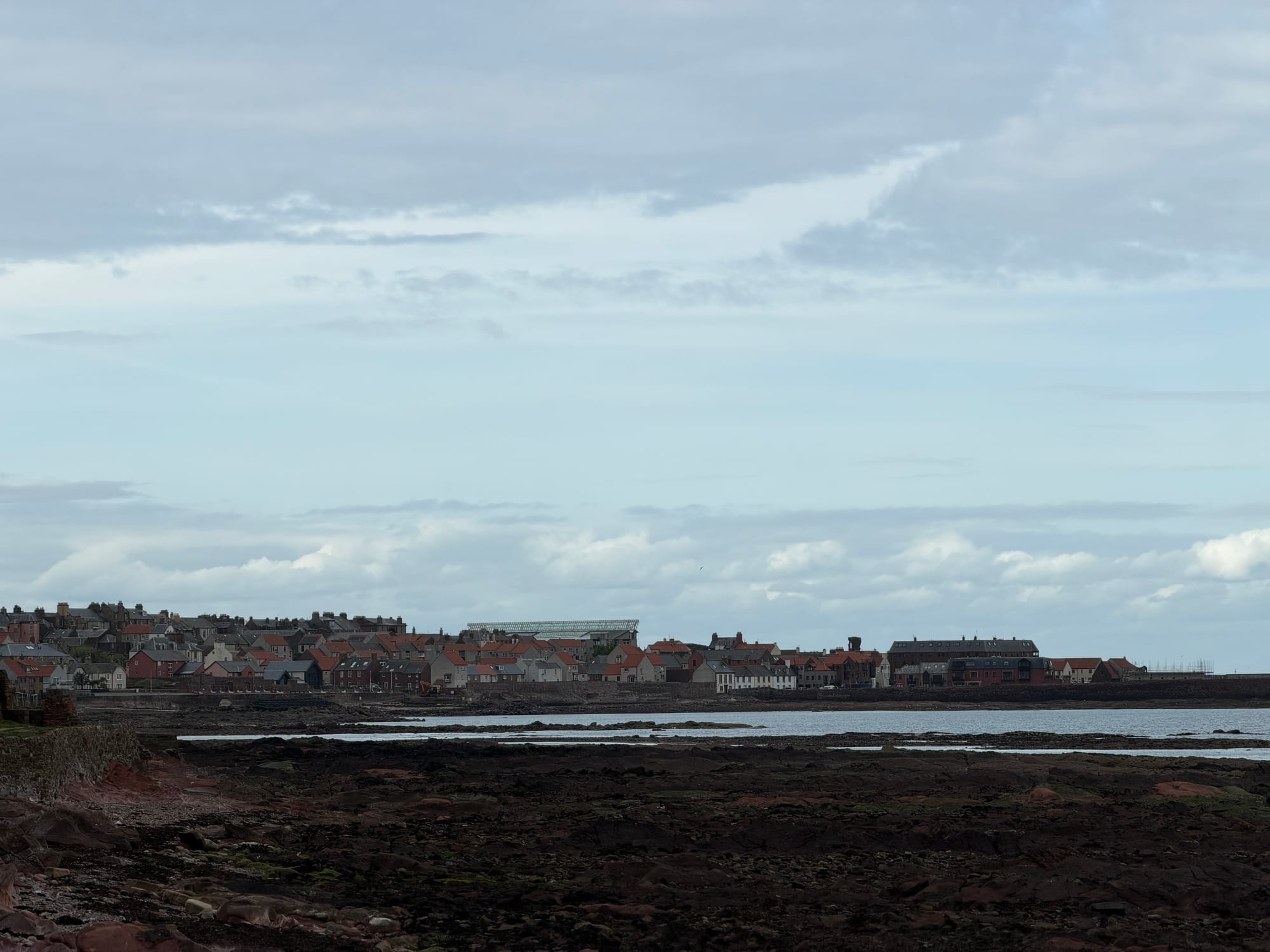
For our final round of the trip, we ventured further east to the charming town of Dunbar, home to a somewhat underrated course with a history dating back to the late 1700s: Dunbar Golf Club.
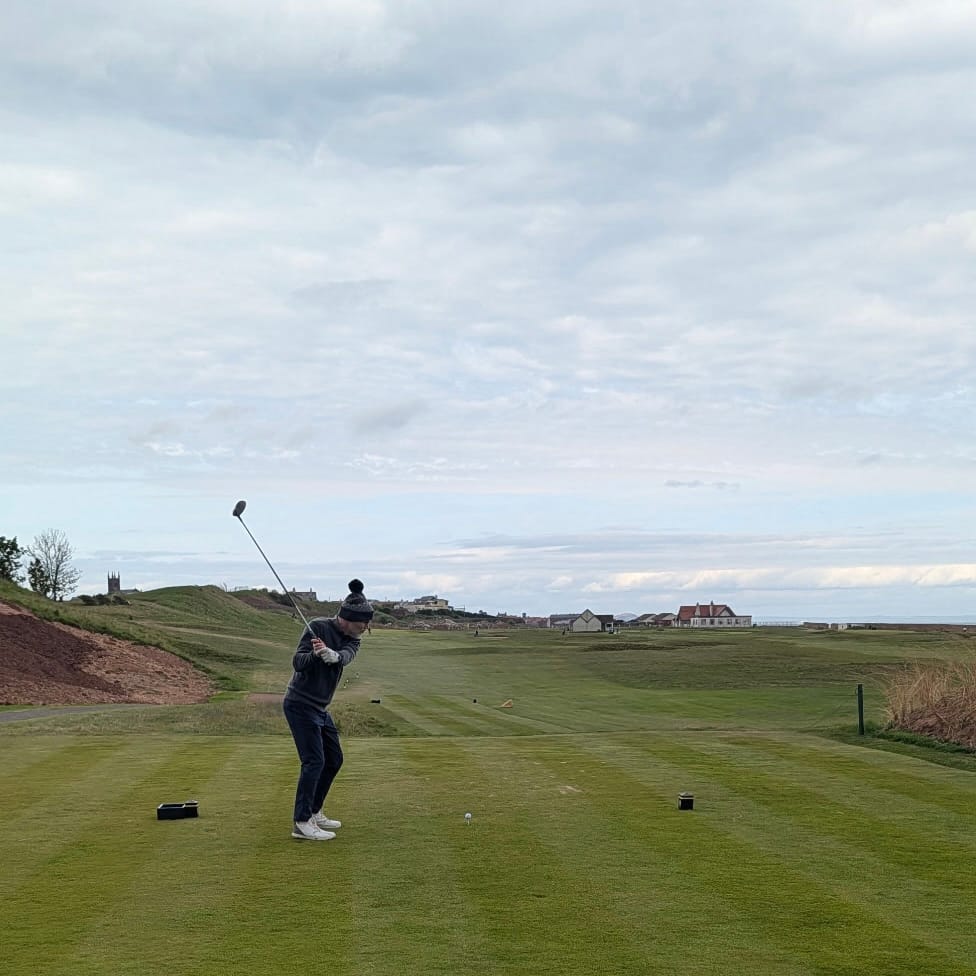
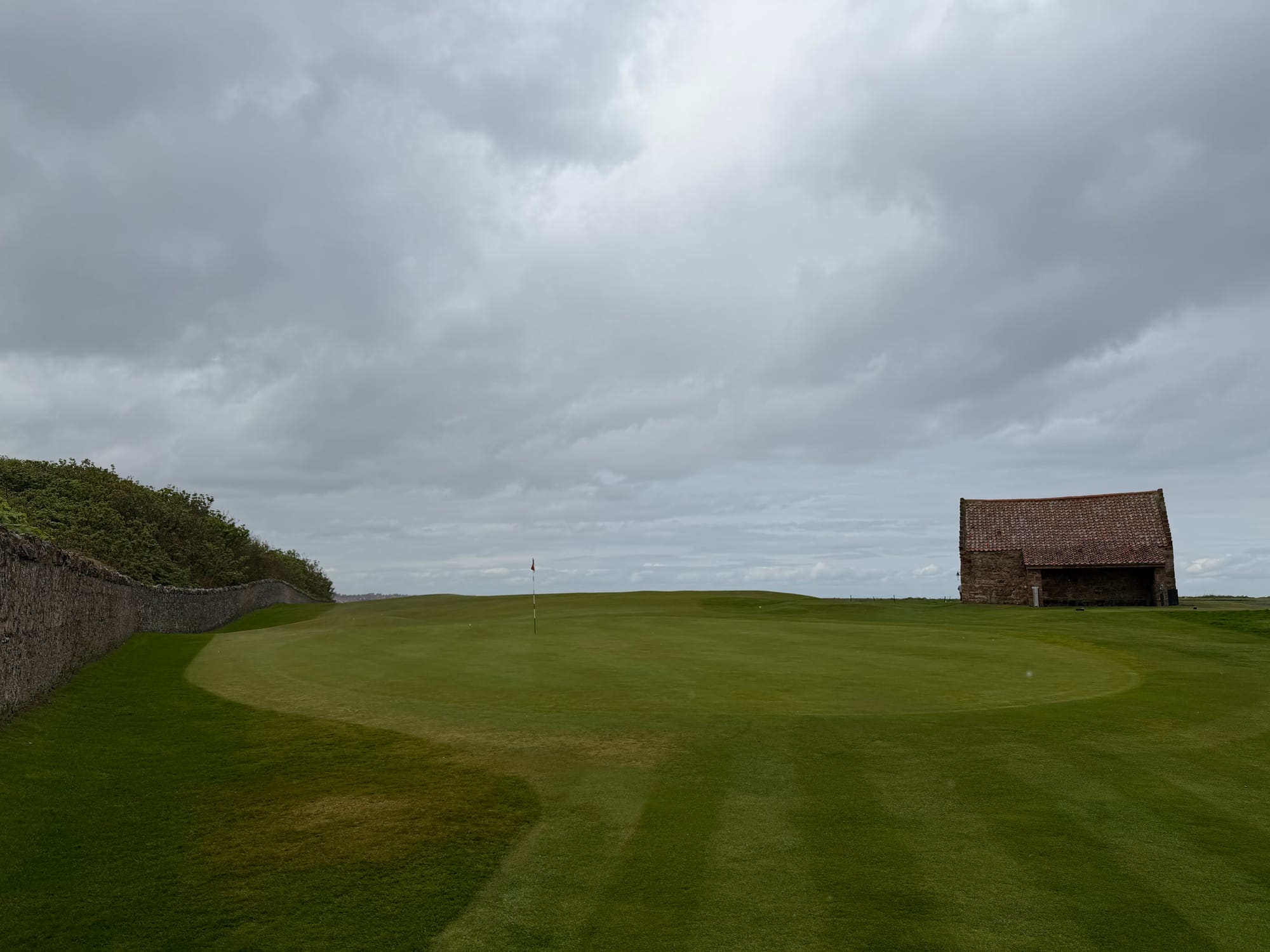
Old Tom Morris once again figures in here. He oversaw an 1894 redo of the layout that expanded it to 18 holes. And there's also a wall – this one, a massive stone barrier built by Napoleonic War prisoners bounding one side of the course, with the North Sea bounding the other.
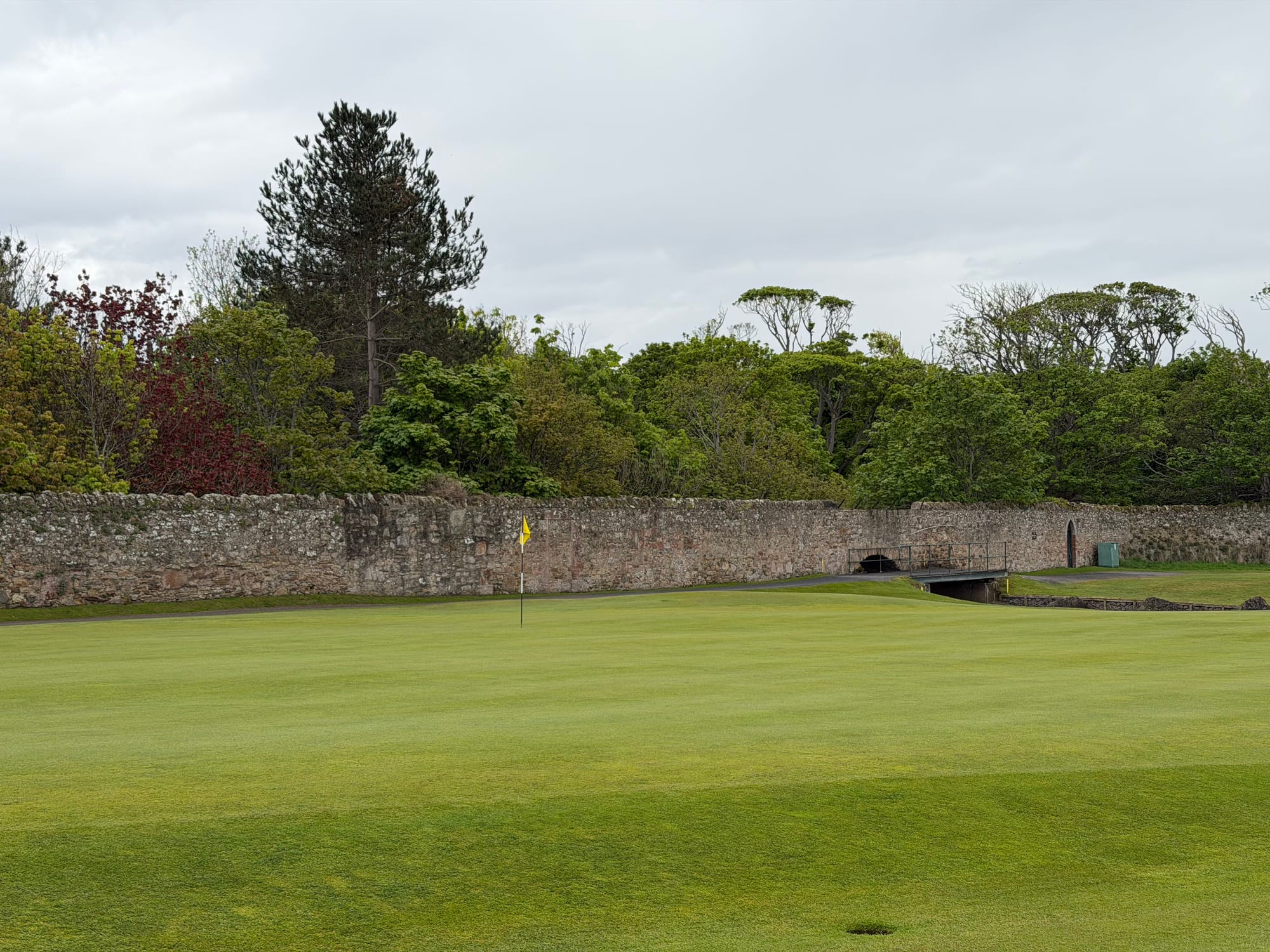
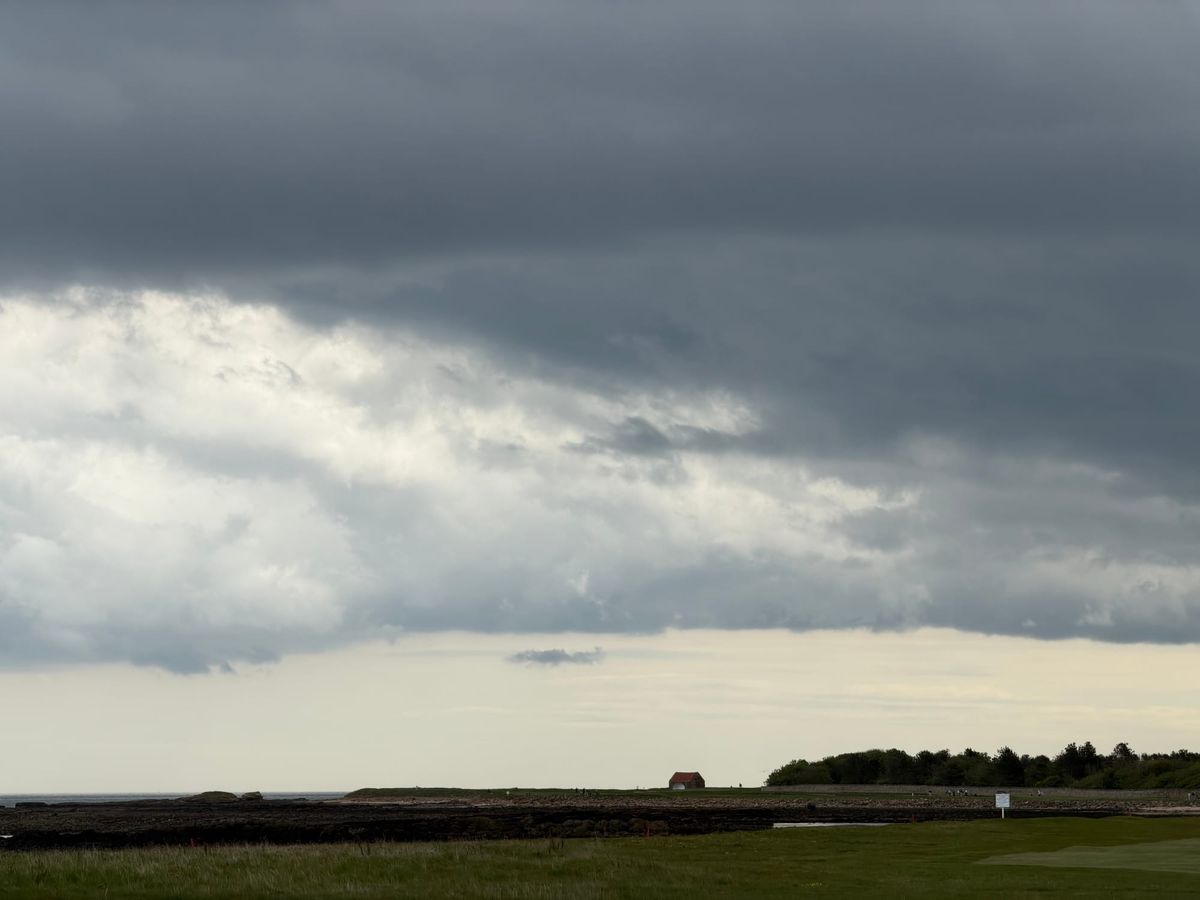
As it turned out, I saved my best round for last. I must be a bit of a mudder because I made back-to-back tap-in birdies during a brief set of showers – our first real rain of the trip. I wound up shooting 37 on the front and then came back in 40, despite leaving a few putts out there.
It was my best score in years and a satisfying way to close things out.
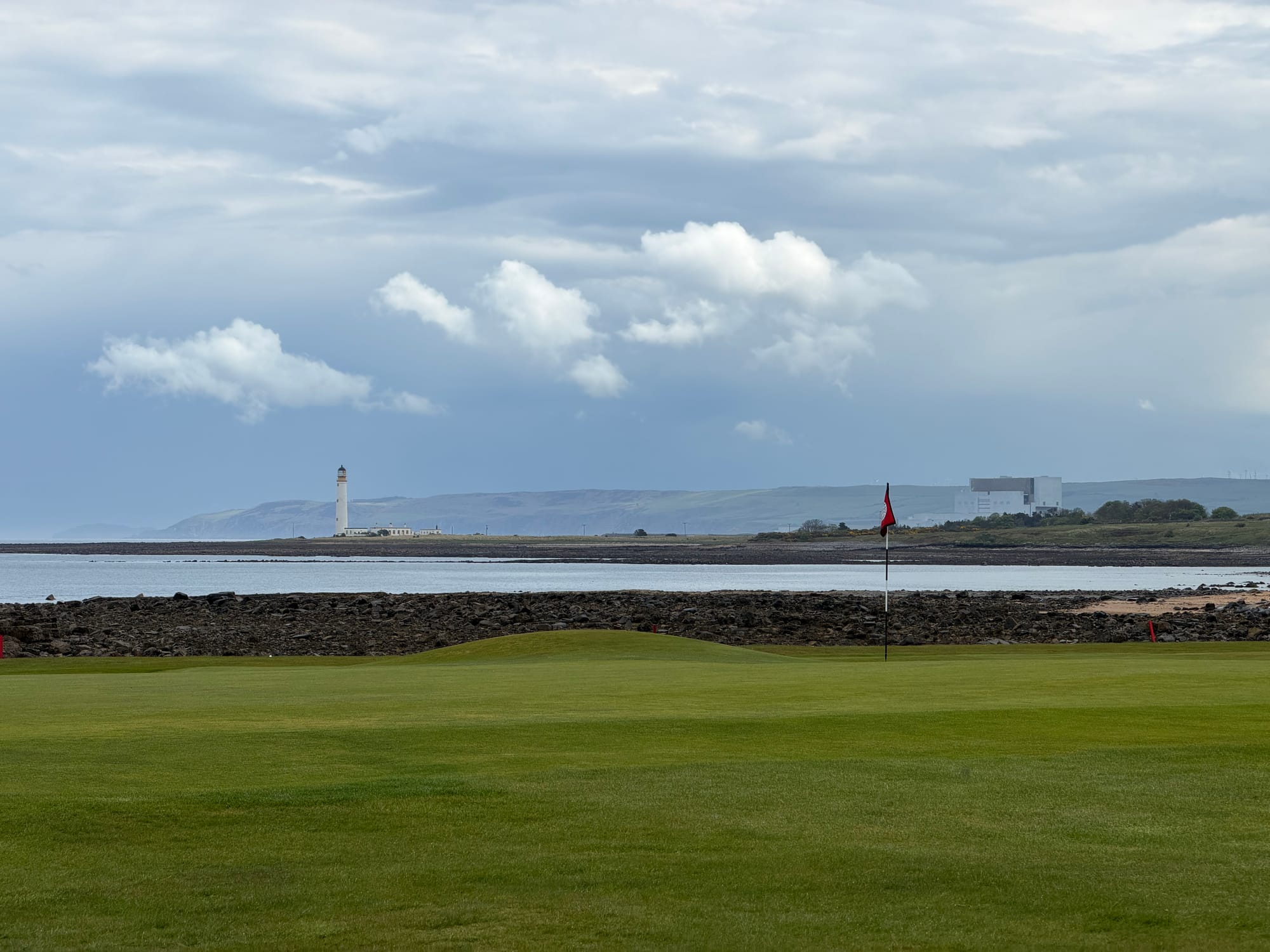
Scotland golf hits different. The courses aren't long. But they're also not easy. Neither are they pretentious, despite their incredible history. You can bring your dog with you on the course. But you can't ride a golf cart (at least not without a medical exemption).
Most people have likely never heard of the courses we played. Yet they're immediately among my top 10 of all time. It's been said before, but golf in Scotland is the best golf. It's golf as it was meant to be.
Thanks for reading!
Until next time, please enjoy a few more photos from the trip.